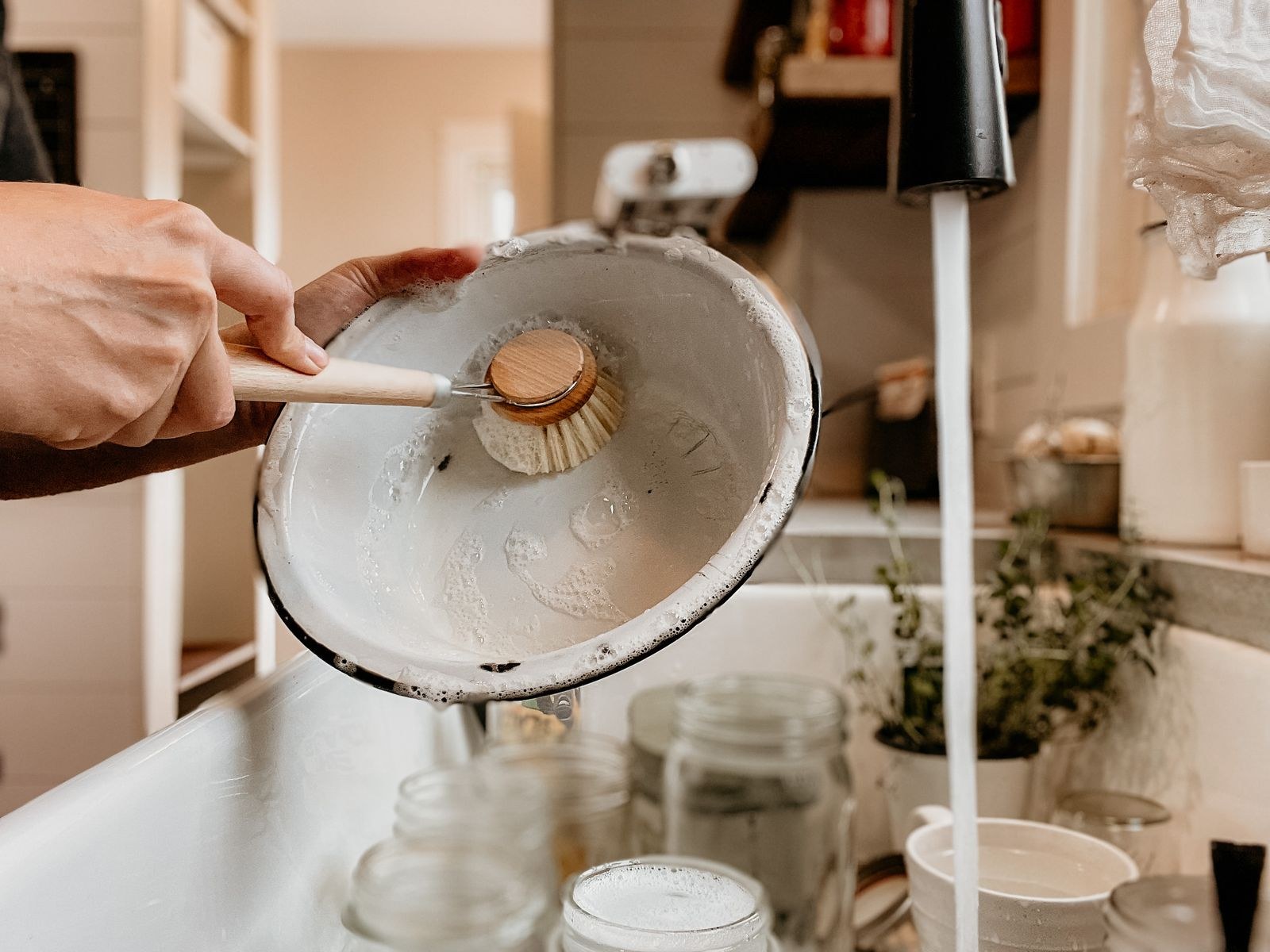
A small sink can still support everyday cooking if dirty dishes do not occupy every surface. Before starting dinner, clear enough room to wash hands and handle food safely. A pan left from breakfast can make the evening cleanup harder before you have even begun.
Choose washing-up equipment around the sink's actual dimensions. A large rack may hold many plates but leave no working counter. A compact rack, suitable draining mat or another appropriate arrangement can work if water is contained and the items can dry hygienically.
Dish soap, a suitable brush or sponge and a clean drying area usually matter more than a collection of cleaning accessories. Store them so they can drain or dry as appropriate instead of sitting in stagnant water. Replace or clean reusable cleaning tools according to suitable hygiene guidance.
Follow cookware instructions when washing. Some items can go in a dishwasher, while others need hand washing or prompt drying. Do not soak electrical parts, and let hot cookware cool as directed rather than subjecting it to an abrupt temperature change.
Wash in a sequence that avoids transferring grease and residue to cleaner items. Keep sharp utensils visible and handle them separately rather than hiding a knife under cloudy water. Clean the sink and surrounding surfaces as needed, especially after handling raw ingredients.
A bowl or removable basin can be useful in some sinks, but it also takes room and needs cleaning. Check whether it genuinely improves the job before buying one. For a very small sink, washing fewer items as you cook may be more effective than adding another container.
Put dry items away so the rack is ready for the next meal. A permanently full rack makes the kitchen feel smaller and encourages wet dishes to be stacked insecurely.
If roommates share the area, agree on a reasonable routine for clearing it. The useful rule is specific enough to follow, such as putting away dry items before starting another wash.
A workable setup keeps hand washing, food preparation and cleanup possible throughout the day. It may involve fewer accessories and a more regular rhythm rather than a larger organizer balanced over the sink.