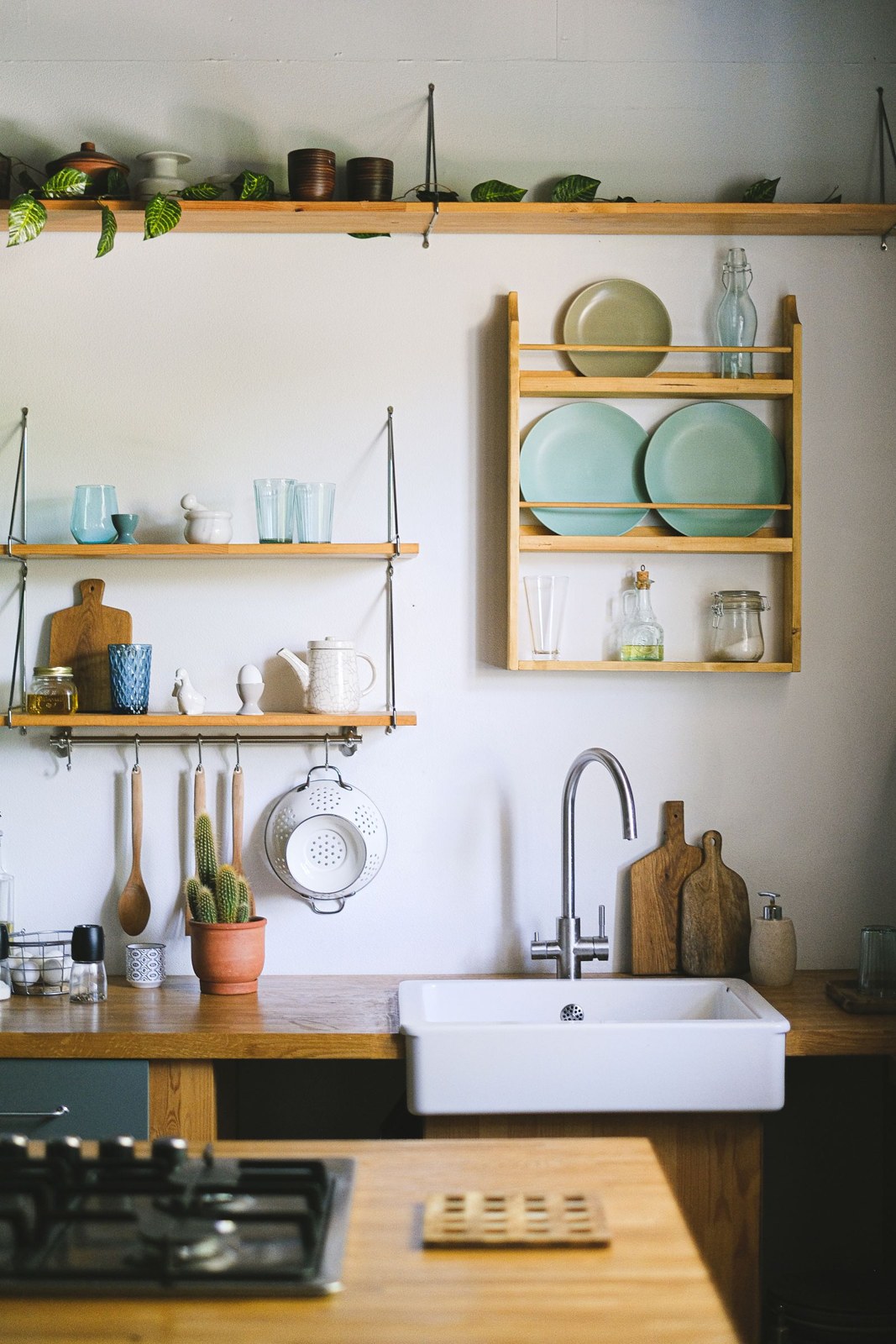
The most valuable part of a small counter may be the empty area where you can set a cutting board. Before deciding which appliances stay out, mark a comfortable preparation space and keep it available. A kitchen can contain useful equipment yet still be difficult to cook in if there is nowhere to work.
List what you use daily, weekly and occasionally. Daily items may deserve an accessible position, but frequency alone is not enough. A heating appliance also needs a suitable outlet, stable surface and the clearances specified by its manufacturer.
Do not push equipment tightly under cabinets or beside other objects merely to make the counter look tidy. Steam, hot surfaces and ventilation affect placement. Include room to open a lid, pull out a basket and handle food without reaching over another hot appliance.
Keep cords away from sinks, burners and walkways, following the appliance instructions. If a safe operating position is unavailable, storing the machine on the counter does not solve the problem. Consider another suitable location or whether the appliance belongs in the kitchen at all.
A utensil pot can be useful if it keeps frequently used tools within reach without crowding the work area. Check that the tools remain clean and dry and that the container itself is easy to wash. Rarely used gadgets may be better in a drawer.
Food storage on the counter should suit the food's instructions and conditions. Do not use appearance as the only guide to where ingredients belong. Keep perishables refrigerated when required and protect stored food appropriately.
Move nonessential items to suitable storage temporarily and cook normally for several days. Notice what you retrieve repeatedly and what you do not miss. This gives better evidence than deciding everything during a single organizing session.
Keep a safe place for hot cookware using an appropriate trivet or surface, and avoid letting mail, bags and charging electronics occupy food-preparation space. In a shared home, agree which section stays clear.
The counter does not need to be completely empty. It needs enough open, safe space for the tasks you perform. Let the equipment support that work rather than allowing the work to happen in the gaps between equipment.