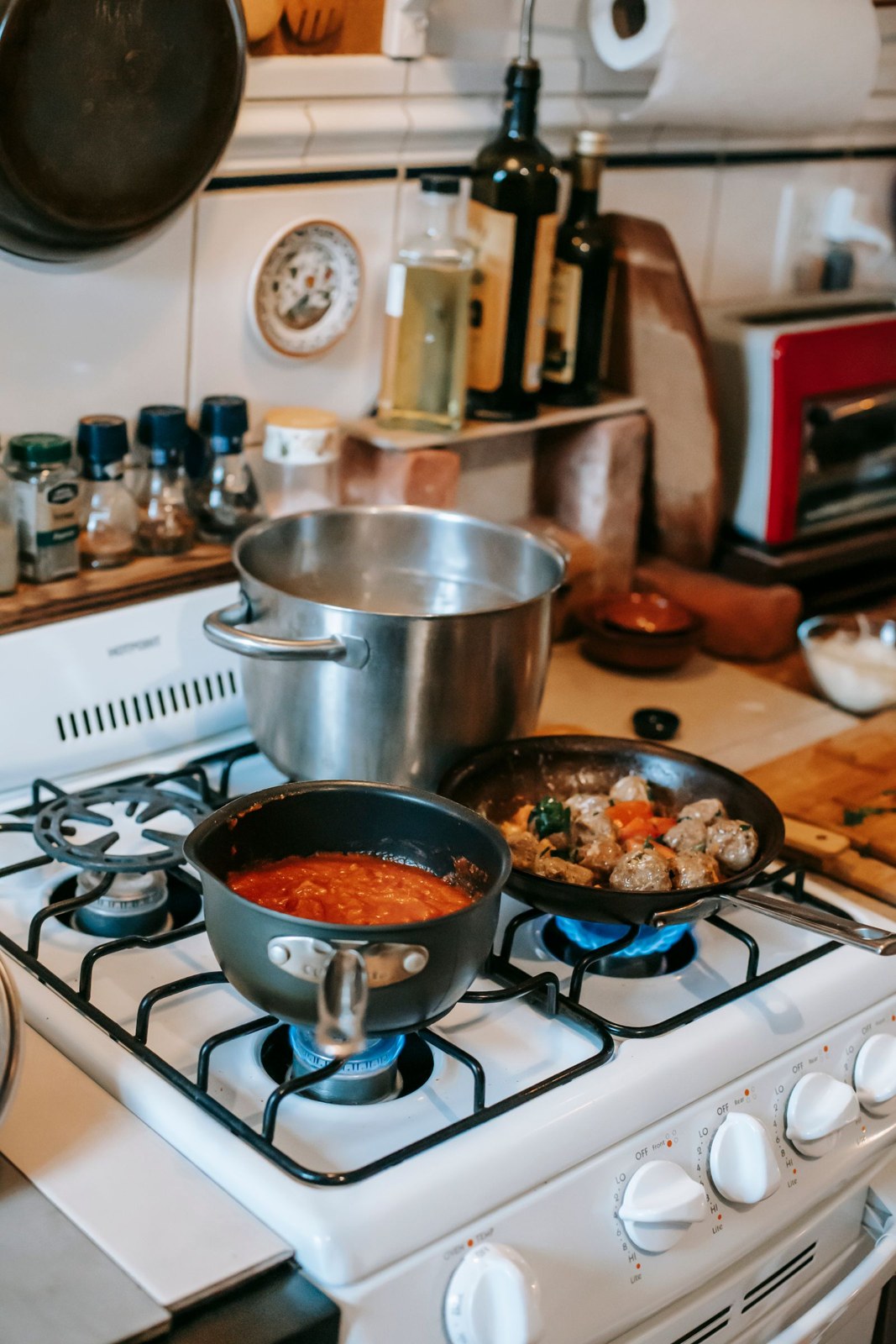
One pan and one pot can handle a modest meal-prep session if you choose compatible tasks. Instead of starting three recipes at once, plan a cooked base and a topping that can become a few meals. For example, use the pot for lentils or pasta and the pan for vegetables and a simple sauce.
Read both preparations before heating anything. Note which ingredient takes longest, what can wait briefly and what needs immediate serving or cooling. Put out the storage containers before cooking so that finished food has somewhere appropriate to go.
Let one task create space for the next
Begin with the longer pot-based component when that makes sense. While it cooks, wash and cut vegetables for the pan. Keep raw ingredients separated appropriately, and clean tools and surfaces between tasks where needed rather than using a busy schedule as a reason to skip food hygiene.
Avoid filling the pan beyond a useful cooking layer. If the vegetables need batches, allow time for them. A small pan crowded with food may steam the ingredients and take longer than expected, making the whole session less predictable.
You can build a sauce in the pan after the vegetables are cooked, using a method suitable for the pan and ingredients. Keep seasonings flexible if the components will become different meals. A plain base gives you room to add lemon, herbs or another finishing flavor later.
Do not leave finished food sitting out while you tackle a long cleanup. Divide cooked portions into shallow containers and refrigerate promptly. Refrigerated leftovers generally have a three-to-four-day window when handled safely; freeze suitable portions sooner if they are meant for later.
Prepare a small number of meals well
Two or three useful portions may be a better target than a week of identical boxes. Leave space in the refrigerator for cooling and storage, and label the food with its contents and date.
Wash the pot and pan once they can be handled safely and according to their care instructions. A short cooking session that leaves the kitchen usable is more likely to become a habit.
At the next meal, take only the portion you need and reheat leftovers to 165°F throughout. Add a fresh or crunchy component when appropriate. The equipment stays simple while the final meals can still vary.