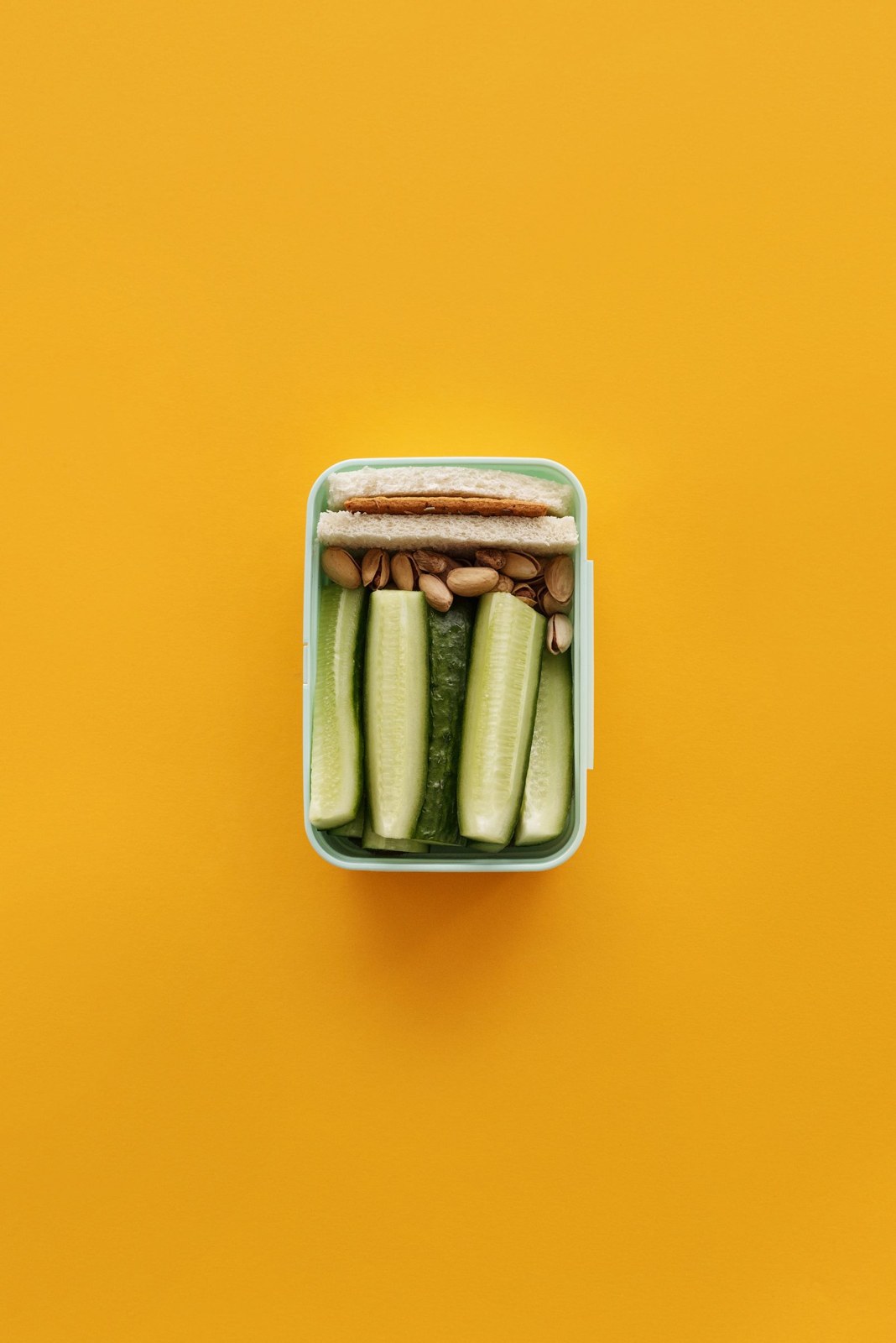
A snack box can make a long day easier when lunch is early and dinner is late. Begin with the timing rather than filling every available compartment. Think about when you will eat, whether you can wash your hands and whether the food must stay cold.
For a short break between classes, food that is easy to handle may be more useful than an elaborate assortment. Whole fruit, suitable dry snacks or a simple sandwich component can be packed according to their storage needs. Check labels and household or campus allergy requirements when choosing ingredients.
Crunchy foods can soften beside cut fruit or other moist ingredients. A divider may prevent contact without preventing moisture movement, so a small separate container can help when texture matters. Avoid adding extra pots for items that can comfortably share the same space.
Perishable snacks, including many dairy foods and prepared cut ingredients, need safe cold storage. Use an insulated bag with adequate cold sources and refrigerate when possible. Do not assume that a small portion can safely remain warm longer than a full meal.
On a day without reliable cooling, choose foods specifically suitable for storage without refrigeration until opened. Read the packaging rather than guessing from whether the item feels dry. Keep unopened portions intact until needed and follow the instructions once opened.
Portioning can be practical without being exact. Put in an amount you normally want, then adjust after a few days if food repeatedly comes home untouched. A snack box is not a reason to buy many specialized miniature packages or to create a rigid eating schedule.
Choose a closure you can open without scattering the contents. Include a napkin if the food is messy, and consider where empty wrappers or fruit peels will go. If the container goes inside a crowded backpack, protect soft food from pressure.
Empty the box when you get home. Wash food-contact surfaces and dry the lid before repacking. Do not simply add fresh food on top of yesterday's remains.
A useful snack routine is usually modest: a few foods you enjoy, stored appropriately and easy to carry. It should reduce the work of getting through the day rather than create another complicated preparation task.