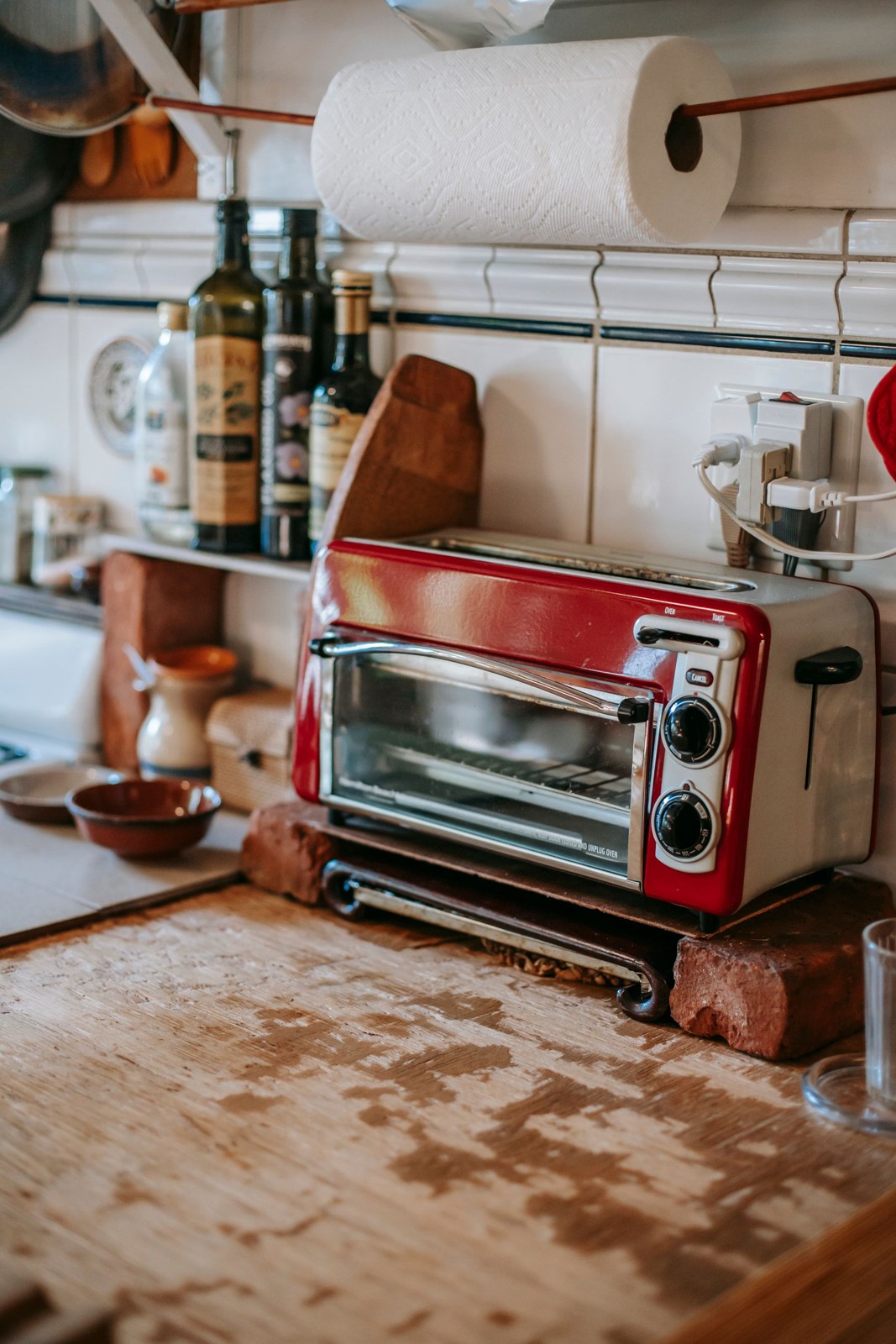
An air fryer and a countertop convection oven can overlap in the foods they prepare, but the experience of using them may be quite different. One may have a pull-out basket, while another uses racks and a door. Those physical differences can matter more in a small kitchen than a long list of preset modes.
Start with the food format. A basket can be convenient for smaller pieces that need turning or moving during cooking. A rack-based cavity may suit a flatter dish or tray, provided the manufacturer permits it and the required clearances are maintained. Check the actual dimensions instead of assuming a pizza or baking dish will fit from the product name.
Follow the food in and out
A drawer needs room in front of the unit and a safe place to rest during handling. A door needs its own opening space, and removing a tray may bring your hands near hot surfaces. Consider how your oven mitts and the cookware handles fit into that movement.
Look at the number of usable cooking levels and the instructions for using them. Several racks do not necessarily mean every level produces the same result at once. The manual may specify positions, rotation or loading limits. Avoid translating a photograph of several trays into a performance promise.
Controls should suit your ordinary tasks. A clear temperature setting, timer and indication of when heating is complete may be more useful than many named programs. Understand whether preheating is required for the method you want to use.
Cleanup and placement can settle the choice
Crumb trays, heating elements, basket inserts and interior corners all create different cleaning routines. Check which parts can be removed and how the interior should be cleaned after cooling. An appliance that fits the counter but cannot be cleaned comfortably is not a good fit overall.
Read the electrical and ventilation instructions for the exact model and confirm any housing rules before buying. Do not operate it inside a storage cabinet simply because it fits there when cold. Check the permissions for cookware and liners separately; conventional-oven compatibility does not establish countertop-appliance compatibility.
If you already have a full oven, ask which repeated task the new appliance would simplify. If the answer is unclear, use the existing oven while you learn your cooking habits. A second appliance earns its space by solving an everyday problem.