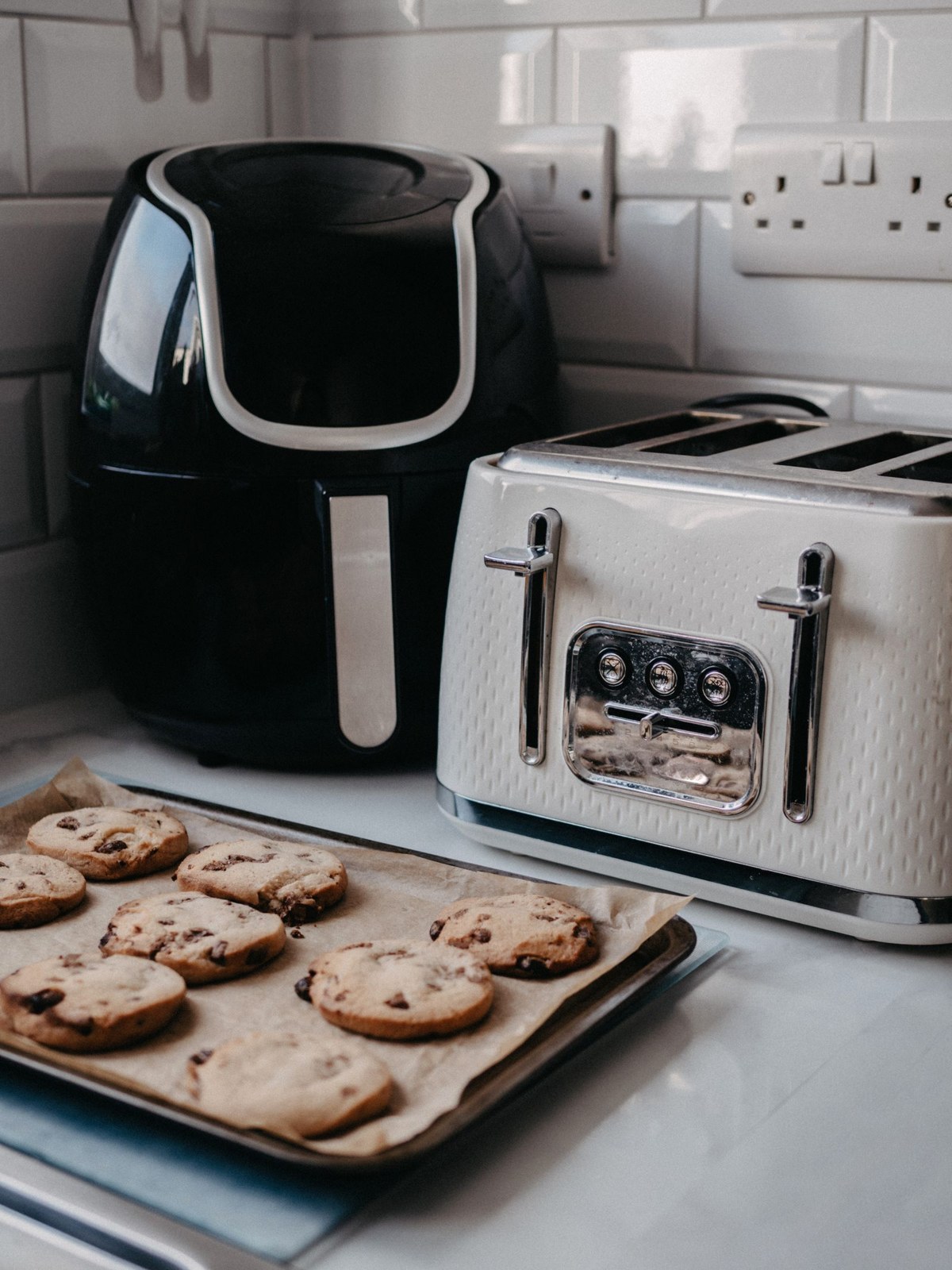
An air fryer for one person should fit more than a serving size. It needs a safe place on the counter, room to open the drawer and a basket you can clean in your sink. Those details can matter more on an ordinary evening than an impressive capacity printed on the box.
Begin with what you would put inside it. A piece of toast, a portion of potatoes and a small batch of vegetables each use space differently. The basket's usable floor area is often more informative than its total volume when the food benefits from being spread out rather than piled deeply.
Compare the basket, not just the number
Look for the internal dimensions or a clear view of the basket and cooking tray. Rounded corners, sloped sides and an elevated insert can reduce the space available for a dish. If you plan to use a small oven-safe container, check that it fits without interfering with the appliance's required airflow and that the manufacturer permits it.
A slightly larger appliance may reduce the need to cook in batches, but it can also occupy counter space you need for chopping. Measure the appliance with the drawer extended, then check the clearance requirements in its manual. Do not assume it can operate inside a cabinet or directly against a wall because it fits there when switched off.
Decide which controls you will use
Temperature and time controls should be easy to read and adjust. Preset buttons can be convenient starting points, but the amount, shape and starting temperature of food still affect the result. A preset name is not a guarantee that every portion is cooked appropriately.
Check how the timer ends, whether the unit pauses when the drawer is removed and how the controls behave after a power interruption. These are model-specific details, so use the manual for the actual product rather than a similar-looking version in a demonstration video.
For foods that require a safe internal temperature, use an appropriate food thermometer and current food-safety guidance. Exterior browning alone does not establish that the center has reached the required temperature.
Compare a complete dinner
Imagine the food you most often want to cook: perhaps a portion of vegetables with another ingredient that needs a different time. Check whether both can fit in a useful layer and whether the instructions allow the cooking sequence you have in mind. A larger nominal capacity does not guarantee enough flat space for that meal.
If the appliance would require two separate batches, decide how you would serve them. One portion may need to wait while another cooks, which changes the convenience calculation. A dual-compartment model introduces its own footprint, controls and cleaning parts, so compare the complete routine rather than assuming more drawers solve every problem.
Also consider your existing oven. For a small frequent meal, the air fryer may offer a convenient cooking space. For occasional large trays, it may duplicate equipment without replacing the job. Write down the meals it would handle during an ordinary week before deciding how much counter space to allocate.
Picture the cleanup before buying
Find out which parts can be removed and how they must be washed. A drawer with awkward corners or a tray you cannot lift comfortably may be annoying even if the appliance cooks well. Check the availability of replacement baskets, trays and other permitted parts.
Finally, consider where the appliance will live between meals. If you must lift it from a high shelf every time, weight and grip become part of the purchase. The right size is the one that accommodates your normal food and your actual kitchen, not the largest model your budget can stretch to.