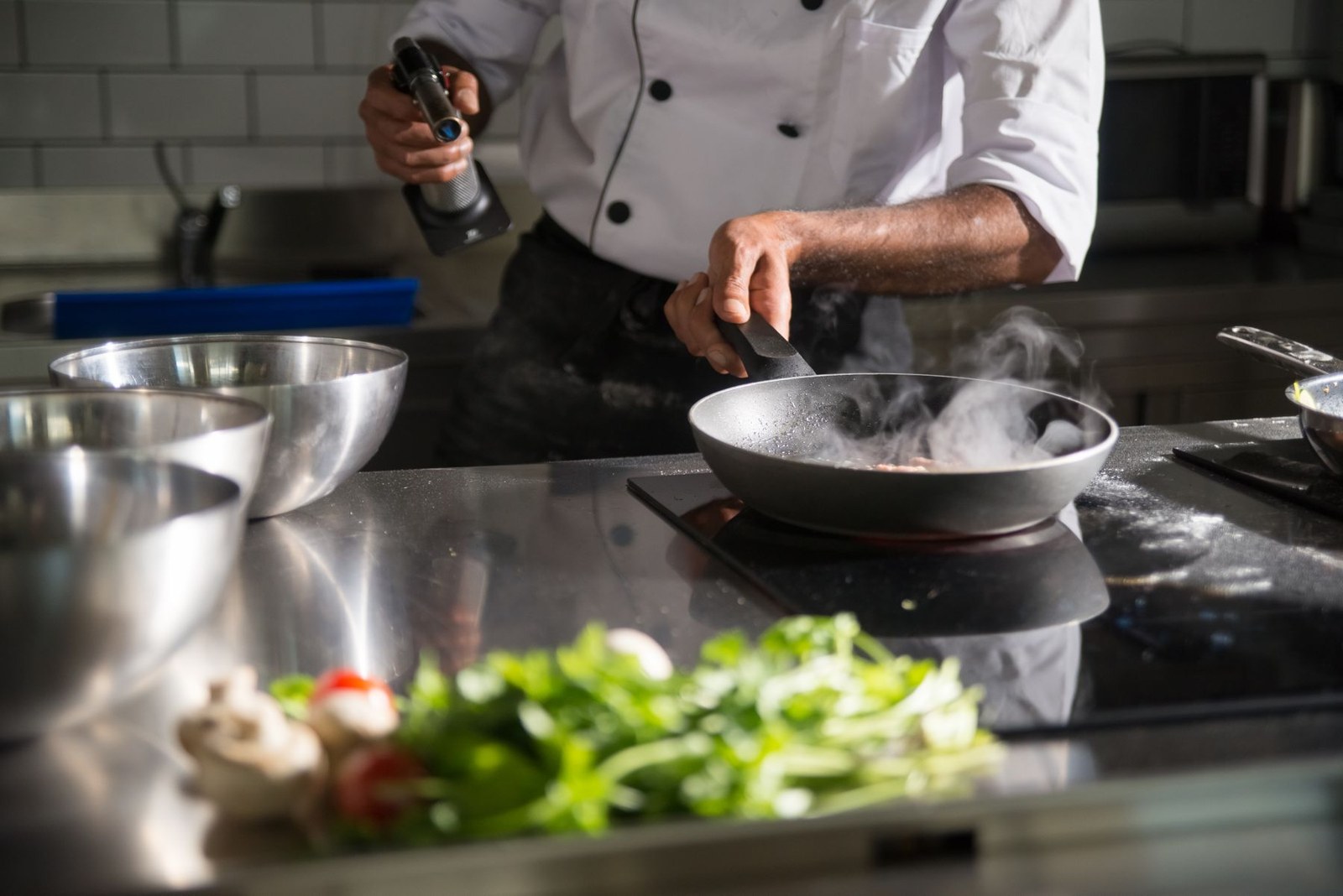
A frying pan can be too small even when you cook only for yourself. Two pieces of toast, a portion of mushrooms or vegetables for tomorrow's lunch may need more room than the number of diners suggests. On the other hand, a large pan that overhangs your burner and barely fits the sink can be a daily nuisance.
Start with the meals you make most often. If you usually cook eggs or one portion of food at a time, a smaller pan may suit you. If you regularly want browned vegetables beside another ingredient, compare the flat interior area rather than the diameter across the rim. Sloping sides can make those measurements quite different.
Try the pan against your kitchen
Check the usable burner size and the stove manufacturer's cookware guidance. The base needs suitable contact with the cooking surface, particularly on an electric or induction cooktop. Induction compatibility is a separate specification; a stainless-looking finish does not establish it.
Measure the space in the sink as well. You should be able to wash the pan without forcing the handle against the faucet or balancing it on an unstable angle. For storage, include the handle in the overall length. A pan that needs the entire shelf diagonally may displace more equipment than you expect.
If you can handle a display model, lift it as you would when serving. Consider how the weight will change with food inside. A helper handle can be useful on heavier cookware, but it also adds width and another part to clean.
Choose a surface for your usual food
Nonstick can make delicate foods easier to release, provided you use and care for the coating as directed. Stainless steel has a different cooking and cleaning routine and may suit someone who wants to build browned residues into a sauce. Neither choice removes the need to manage heat.
Look at the handle attachment, lid availability and any oven-use limits for the entire pan. A pan body may tolerate conditions that its handle or lid does not. Do not assume a separately purchased lid creates an oven-safe combination.
One well-chosen pan is a useful starting point. Add another when a repeated cooking problem justifies it, such as needing two different temperatures at once. Buying adjacent sizes immediately can leave you with two pans that mostly do the same job.