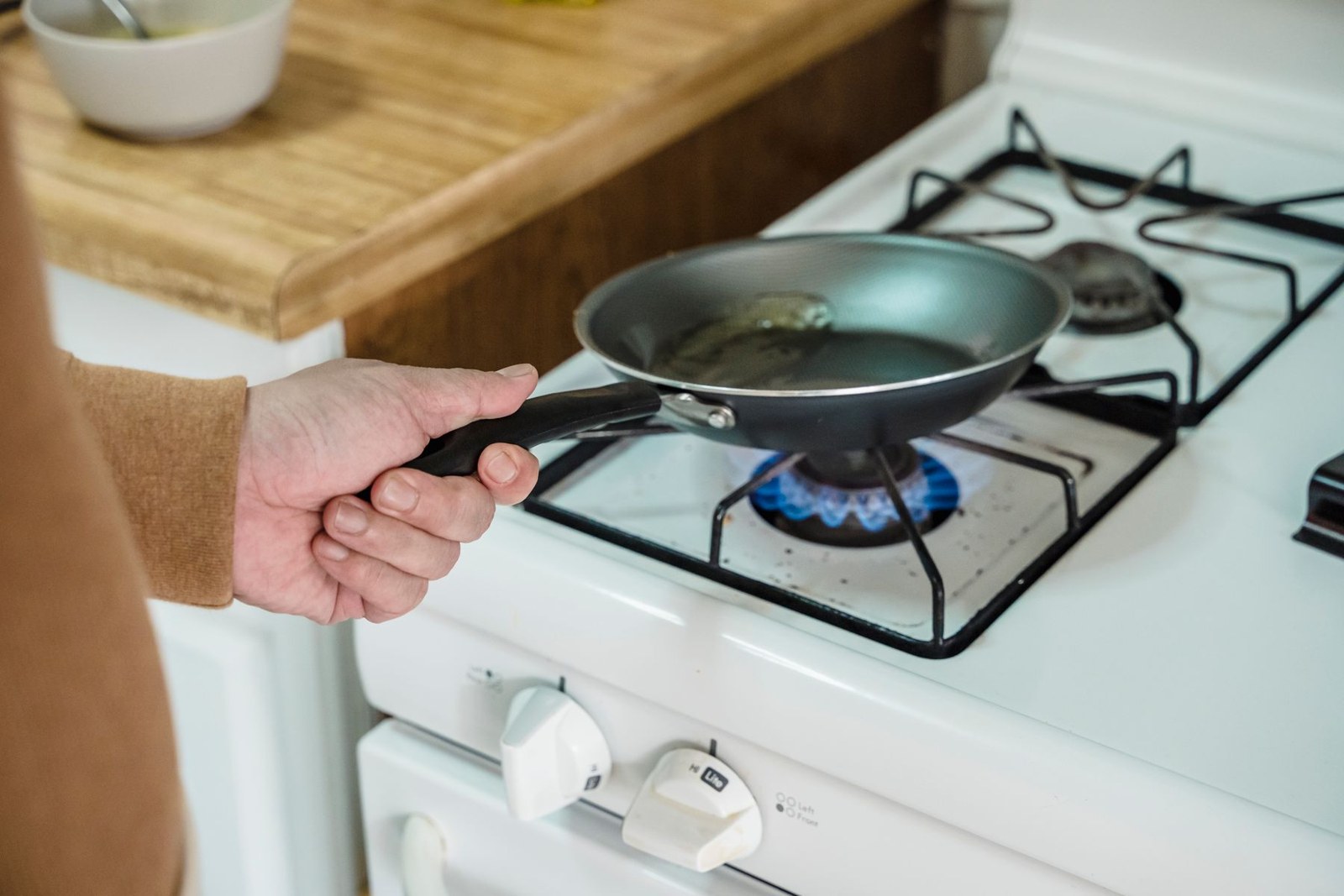
Stainless steel and nonstick are not two grades of the same pan. They offer different cooking surfaces, and a comparison becomes more useful when you imagine a specific meal. Eggs that need to slide onto toast create a different priority from vegetables you want to brown before making a sauce.
A nonstick surface can be forgiving with foods that are delicate or prone to catching. It still needs appropriate heat, compatible utensils and cleaning that respects the coating. Follow the manufacturer's instructions rather than treating the word nonstick as permission to cook anything without attention.
Stainless steel does not have that release coating. The cooking method matters more, including heat, moisture and when you try to move the food. Its surface can also leave browned cooking residues that become part of a pan sauce. That is an advantage for some meals and extra work for others.
Think about the habits the pan asks of you
If you often put a pan on the stove and get distracted preparing ingredients, change that habit before choosing either material. In particular, do not apply high-heat empty-pan demonstrations intended for some stainless cookware to a nonstick pan. The safe heating routine is not interchangeable.
For utensils, check what the manufacturer permits. Softer tools may help protect a coating, but the utensil itself still needs an appropriate heat rating. For washing, avoid assuming that a dishwasher-safe label means every detergent and cycle is ideal for the pan's long-term appearance or performance.
Weight is worth comparing in person when possible. A thick base, layered construction and handle design can change how a pan feels more than its surface label. Lift it, imagine food inside it and check whether the handle gives you a comfortable grip.
Avoid buying around one impressive demonstration
A video showing perfect release or dramatic browning cannot tell you how a particular pan will behave on your stove with your food. Read the exact model's care information, cooking-surface dimensions and stove compatibility instead. Oven limits also depend on handles and lids, not only the main body.
For a first kitchen, choose the surface that suits your most frequent meal and your willingness to learn its routine. You can add a complementary pan later. Starting with two different materials makes sense when you already know which separate jobs they will do, not because one is supposedly professional and the other is only for beginners.