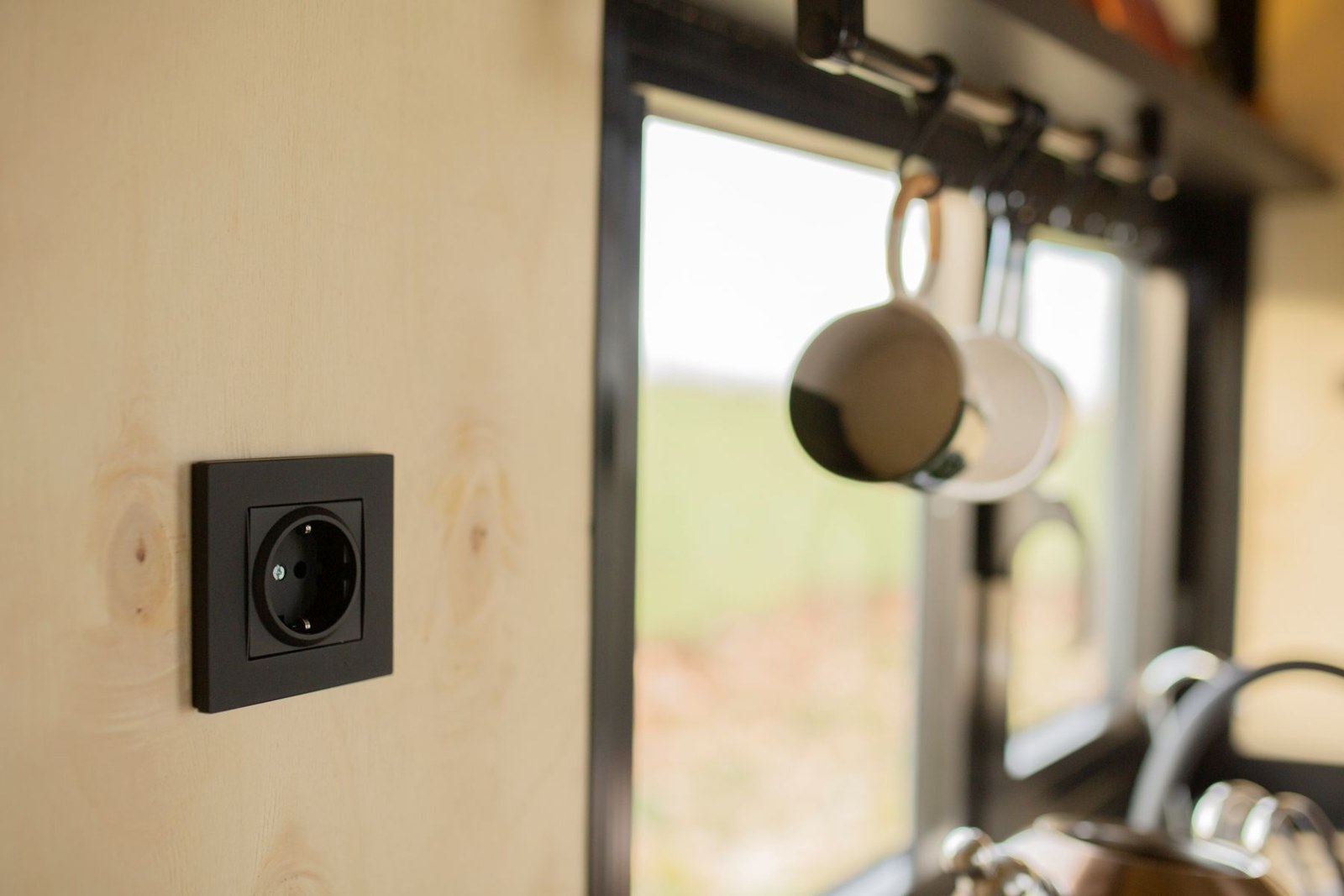
Before choosing a countertop appliance, stand where you would use it. Notice the outlet, sink, cabinet doors and route through the kitchen. A machine can fit neatly on a shelf yet have no suitable place to run when it is time to cook.
Start with the manual's placement instructions. Heating appliances may need clearance beside, behind and above them. Steam can affect nearby cabinetry, while a swinging door or pull-out basket needs unobstructed space. Include those requirements in your measurements rather than measuring the appliance alone.
Follow the cord's route
The cord should reach a suitable outlet without stretching across the sink, a hot burner or a walkway. Avoid a position where someone passing can catch it. Do not assume an extension cord or power strip is an acceptable workaround: follow the appliance instructions and obtain qualified advice if the available electrical arrangement is unsuitable.
Check the voltage and electrical specifications for the market where the appliance will be used. A plug adapter does not convert an appliance's voltage requirements. When shopping from international sellers, verify the exact model rather than relying on a photograph that looks familiar.
Several appliances clustered on the same part of a counter can also create a practical problem. You may need to move a toaster every time you open an air fryer. Lay down paper footprints for the appliances and rehearse the ordinary sequence of making breakfast or dinner before buying another machine.
A shared kitchen adds another consideration: people need to understand which equipment is hot or operating. Keep controls visible and avoid placing an appliance where another person will naturally set a bag, towel or stack of dishes beside its vents.
Storage is a separate measurement
If you plan to store the appliance after each use, check its weight, handle position and cooling instructions. A heavy machine in a high cabinet may be awkward to retrieve safely. Never pack away a heating appliance before it has cooled as directed.
Inspect the cord periodically and stop using equipment with damage rather than disguising it behind furniture. The useful purchase is the appliance that has both a suitable operating spot and a manageable storage routine. If neither exists, rearranging the kitchen may be more valuable than finding a smaller-looking model.