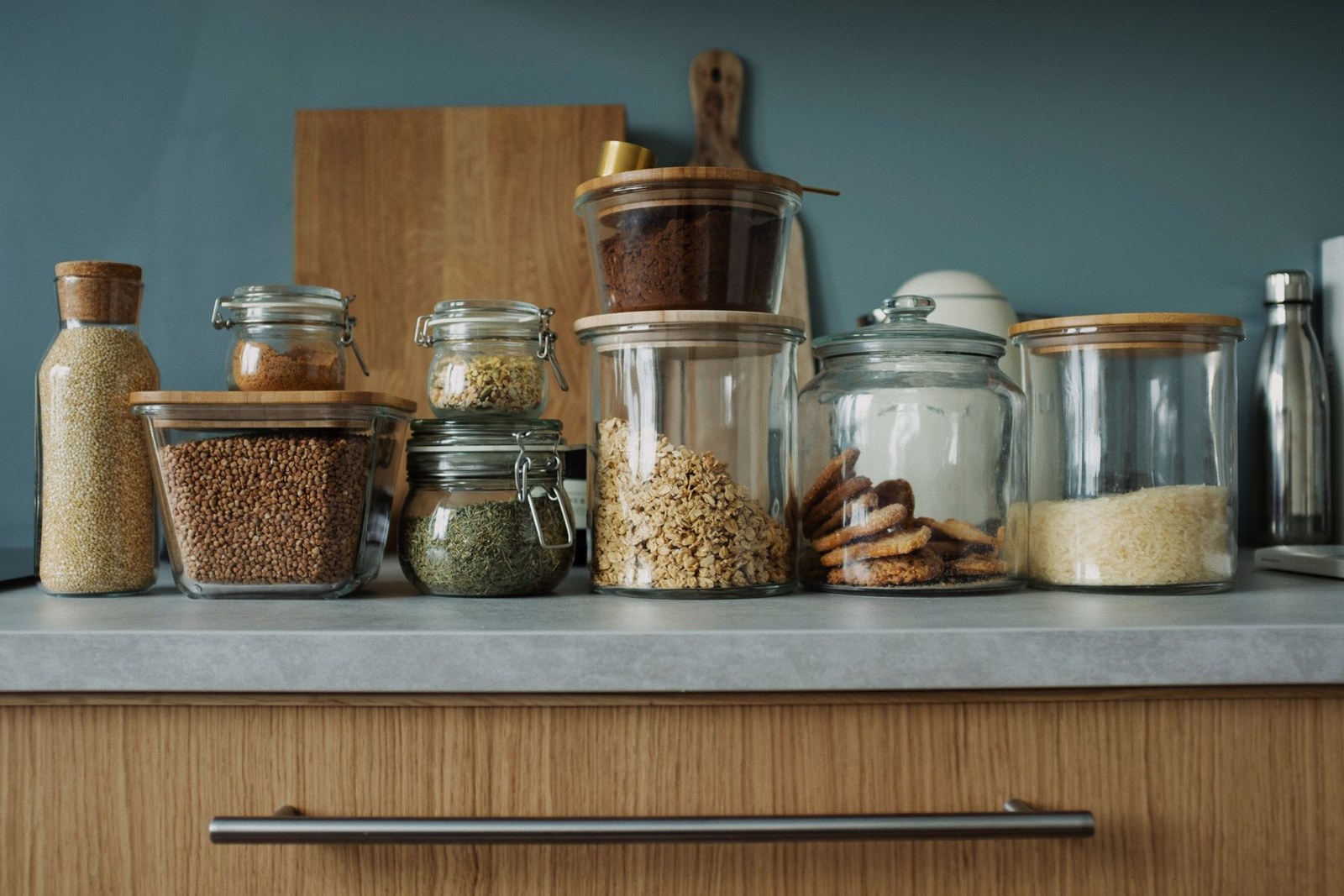
A storage jar may look simple from the outside while hiding several cleaning surfaces in its lid. Before buying, examine the opening, corners, seal and any hinge mechanism. You will need to remove food residue from all of them, not just rinse the visible glass or plastic body.
A wide mouth usually makes scooping and washing easier. Check whether your hand or an appropriate cleaning brush can reach the base without becoming trapped or scraping against a sharp edge. A narrow decorative neck may be awkward for sticky ingredients or powders that cling to the walls.
Inspect the lid as a separate item
Find out whether a gasket is removable and how it should be cleaned. Some seals are designed to come out; others are not. Follow the manufacturer's method rather than prying apart a closure that was intended to remain assembled.
Dishwasher suitability can differ between the jar, lid and seal. Verify each component. Wooden or coated lids may have different care requirements from the body, and a closure with multiple recesses may take longer to dry than a plain screw top.
For dry ingredients, allow every part to dry fully before refilling. Water trapped under a seal can be difficult to notice once the lid is back on. It helps to choose a design whose components can sit separately on a drying rack without rolling away or disappearing into a utensil basket.
Think about the food you will store. A smooth jar used for dry pasta has a different cleaning burden from one holding oily seeds or sticky dried fruit. Match the shape and closure to the ingredient rather than assuming one style suits the entire pantry.
Check handling and replacement
Try to judge the weight of the filled jar, not just the empty one. A large glass container on a high shelf can be awkward to lift safely. Smaller portions or a lower storage position may make more sense for frequently used ingredients.
If the jar depends on a particular gasket or clip, check whether replacements are available. A damaged seal can turn a useful container into a poorly closing ornament.
You may find that a plain food-storage box or the original package is easier to maintain. Choose the jar when its access, closure and cleaning routine improve the way you use the food, not only the appearance of the shelf.