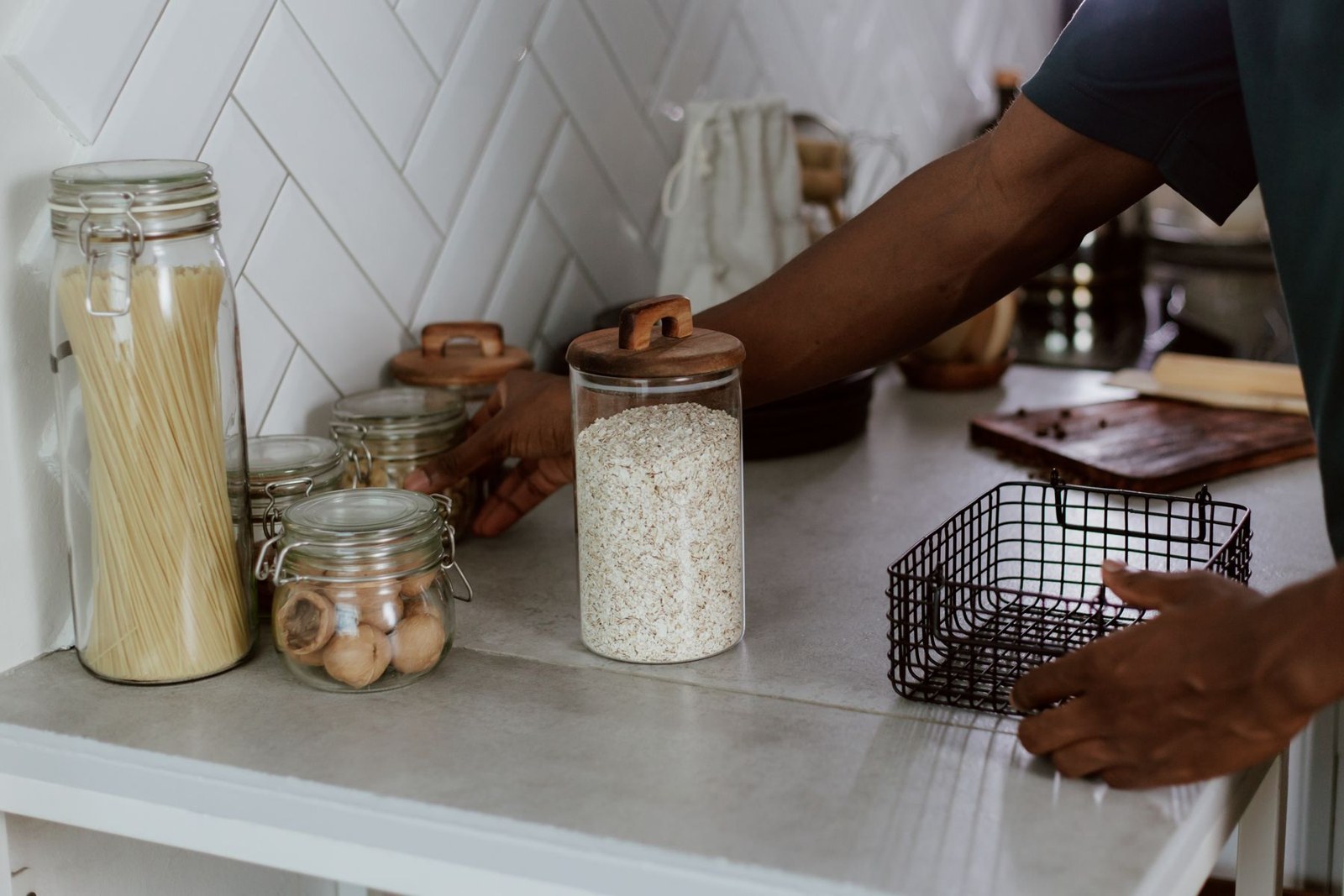
Decanting every dry ingredient can make a pantry look coordinated, but it also creates work. You must transfer the food, clean another container and preserve information from the package. For many ingredients, a properly closed original bag or box is perfectly useful.
Start with the foods that actually cause a problem. A frequently used bag of flour may spill, while a small packet of rice might already stand neatly in a bin. Choose a container to solve that specific issue rather than replacing every package at once.
The original packaging contains ingredients, allergen information, cooking directions, dates and sometimes a batch code. Preserve the details you may need after decanting. A label with only the product name can be inadequate when several similar ingredients have different preparation instructions.
Do not top up a container indefinitely without considering the older food inside. Empty and clean it as appropriate between batches, let it dry completely and avoid mixing products in a way that loses their identity or dates. Moisture left after washing is particularly unwelcome in dry-food storage.
Choose food-contact containers intended for the ingredients you plan to store. A decorative jar is not automatically suitable for food. Check the closure, ease of cleaning and whether the opening allows you to scoop or pour without spilling.
Capacity should match a normal purchase, with practical space for access. A jar that almost holds a full bag leaves you managing two packages. On the other hand, a huge container for a rarely used ingredient occupies room that could serve several everyday foods.
Grouping original packets in a shallow bin can make them easier to retrieve while preserving their labels. Arrange them so the names are visible and older items are not buried. Clips or suitable closures may solve the problem more cheaply than a new jar collection.
Store dry foods according to their package directions, away from unsuitable heat, moisture or pests. Inspect the cupboard periodically instead of assuming a closed container eliminates every storage issue.
A functional pantry can include jars, clipped bags and unopened boxes together. The useful standard is whether you can identify, access and use the food without unnecessary mess or waste.