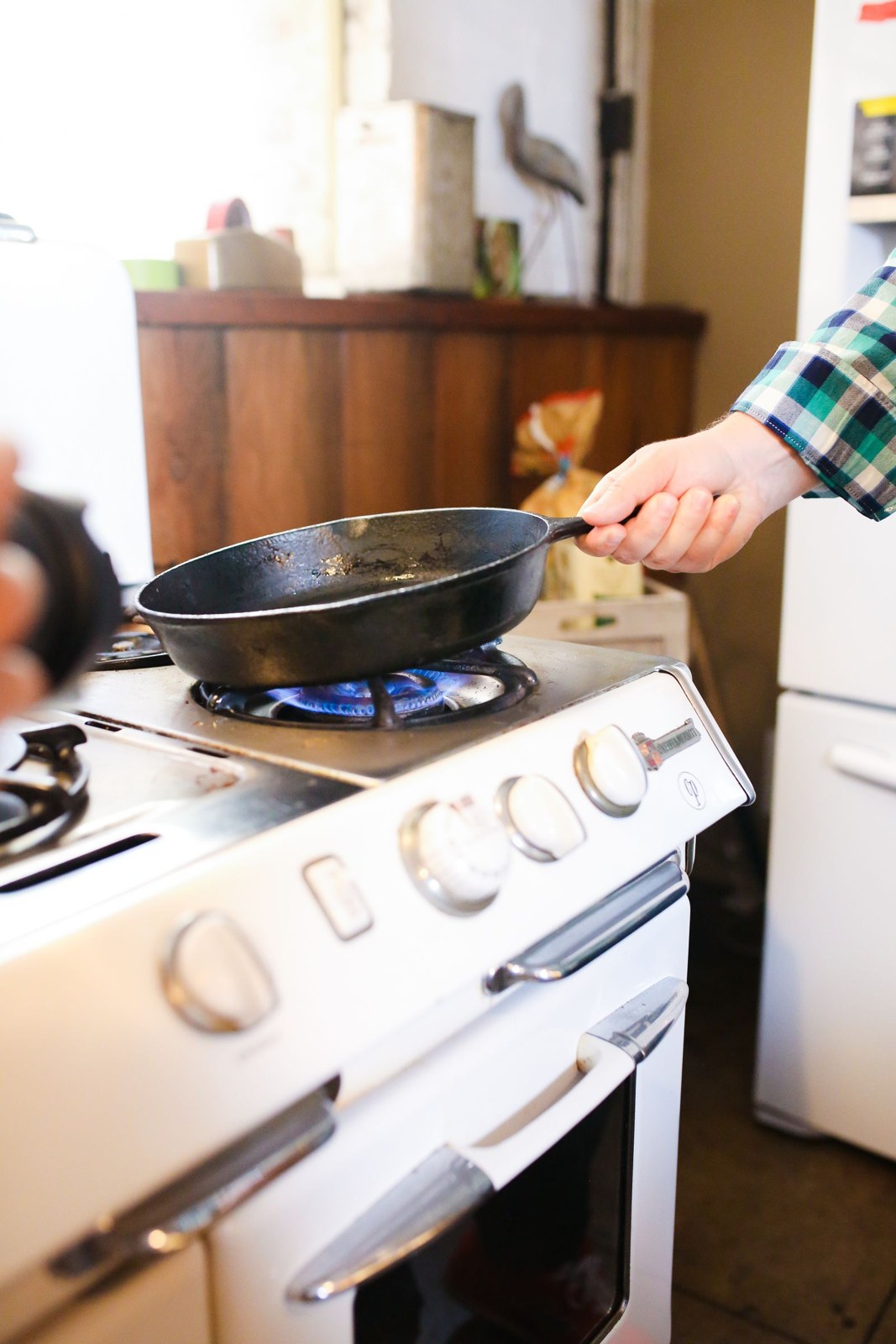
“Heat the pan first” is useful advice only when you know what kind of pan and cooking method are involved. A stainless-steel skillet used for browning behaves differently from a coated pan used for a gentle egg. Start with the cookware's instructions and the recipe rather than turning every empty pan to high heat.
Set the pan on a suitable burner. The heat source should match the base reasonably well, and handles should be positioned safely. Have the ingredients and utensils ready so that you do not leave the pan heating unattended while searching for something in a cupboard.
Use a controlled start
For a recipe that calls for preheating, use the recommended level and allow the pan time to respond. A thick base may change temperature more slowly than a thin one. Turning the burner to maximum does not necessarily produce a more even or useful cooking surface.
Nonstick cookware needs particular care. Follow its instructions about adding oil or food and avoid prolonged empty heating or overheating. Do not apply a high-heat stainless-steel demonstration to a nonstick surface just because both pans have the same diameter.
Watch the oil when the method includes it. It should behave as expected for the recipe without smoking heavily. Smoke can indicate excessive heat; reduce or remove heat safely as appropriate rather than adding food in a rush to cool the pan. Never use water to address burning oil.
Food provides feedback. A moderate sizzle can be appropriate for many sautéing tasks, while immediate scorching suggests the temperature is too high. Very little activity may mean the pan or ingredients are too cool for the intended method. These cues are about cooking control, not proof that food has reached a safe internal temperature.
Learning one burner and one pan
For a familiar vegetable sauté, keep the pan, quantity and cut size consistent for a few attempts. Notice how long the pan takes to respond to a moderate setting and what happens when the food enters. This teaches you more about your own stove than copying a burner number from a video recorded on different equipment.
If the food scorches quickly, reduce the starting heat on the next attempt. If it releases water and cooks slowly, also consider moisture and crowding before increasing the heat. Those variables can produce similar symptoms but call for different changes.
Keep a short note only if it helps: the pan, approximate quantity and useful burner setting. Treat that as a reference for the same task, not permission to use the setting for a nonstick pan, a different oil or an empty heating period.
Adjust after the food goes in
Adding food changes the pan's temperature. A large quantity of cold ingredients can cool it substantially, especially in a small pan. Cook in batches where appropriate instead of trying to compensate for crowding with extreme heat.
Once browning begins, adjust the burner as needed. Preheating is a starting condition, not a command to leave the same setting unchanged until dinner is done. Delicate ingredients, thick pieces and sauces may require different heat levels during the same meal.
Avoid relying on a single water-drop trick as a universal test. The result depends on the surface and conditions and can encourage excessive heat or splattering when oil is present. The pan instructions, recipe and observable behavior of the food together provide a better basis for learning your equipment.