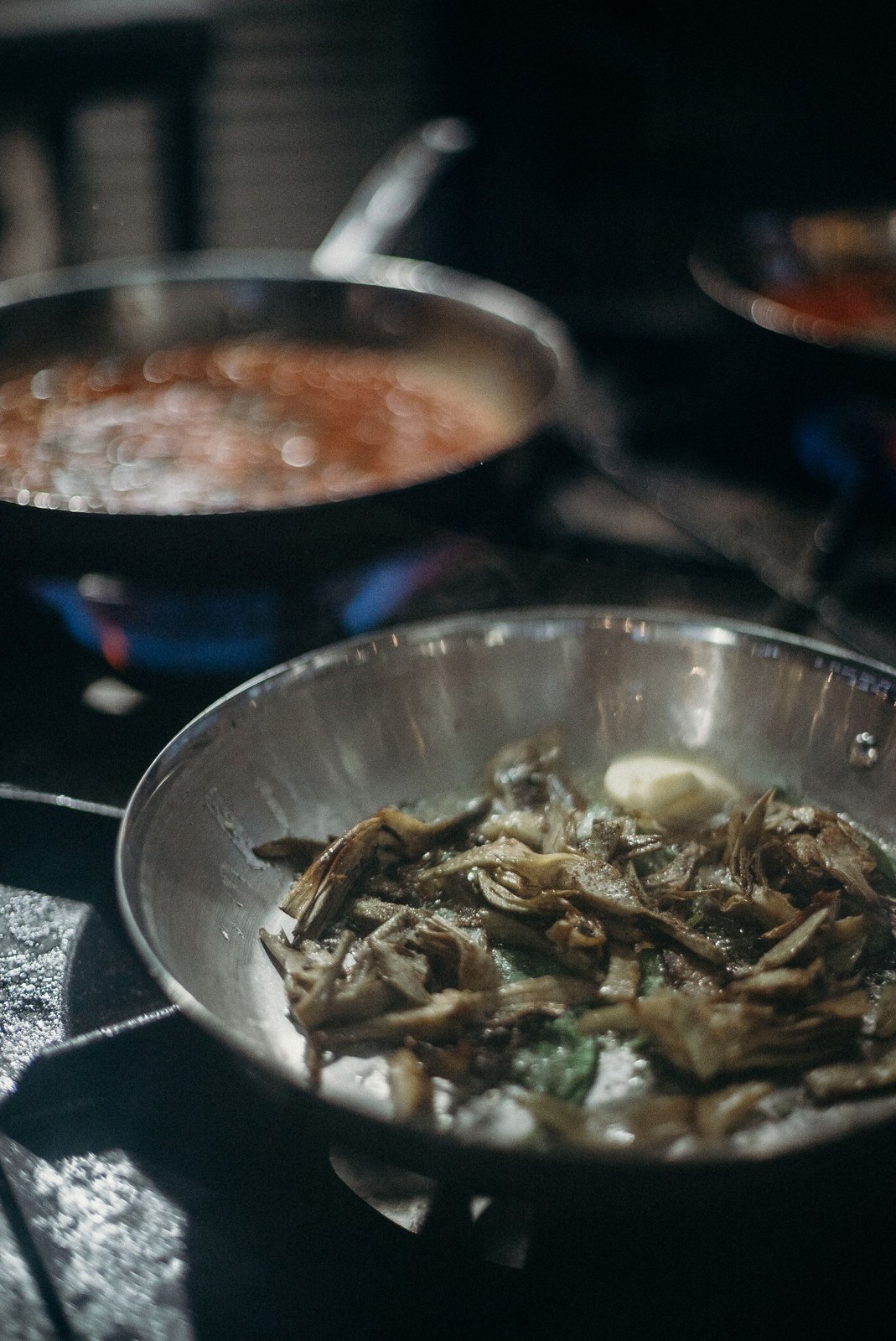
Stainless steel does not behave like a nonstick coating. Some initial contact between food and the surface is normal, and browned food may release more readily after a crust forms. Trying to move it too early can tear it and leave part attached to the pan.
Before blaming the cookware, check the preparation. Wet ingredients can cool the surface and produce steam. Drying the outside appropriately with a clean towel can help when the recipe calls for browning. Do not wash raw poultry as a drying or preparation step; follow safe handling guidance for the ingredient.
Use the pan's recommended preheating method and an appropriate amount of cooking fat for the recipe. Excessive heat can scorch the food and oil, while insufficient heat or crowding may prevent the intended browning. There is no single burner setting that works across every stove and pan.
Give the food a chance to release
Place ingredients in a useful layer with space where the method requires it. Leave them undisturbed long enough for the surface to cook, then test gently with a suitable utensil. If a piece resists strongly, it may need more time, but monitor for burning rather than waiting indefinitely.
A flexible turner can help lift delicate food without scraping aggressively. Choose a utensil that suits the pan and ingredient. Adding more force is rarely the best response to food that is firmly attached.
Some foods are simply demanding on stainless steel. Eggs and delicate fish can require more control than sturdy vegetables. A different pan may be more convenient for a particular task, especially while you are learning, without making the stainless-steel pan a poor purchase.
Separate useful browning from burning
Brown deposits left after cooking can become part of a sauce when appropriate. Burned black residue will usually contribute bitterness instead. Reduce heat and follow a suitable deglazing method rather than assuming every stuck patch should be dissolved into dinner.
Clean the pan according to the manufacturer's instructions after it has cooled sufficiently. Built-up residue can affect the next cooking session. Avoid a sudden temperature shock or abrasive treatment that the maker prohibits.
Change one variable at a time on the next attempt: a smaller batch, drier ingredients or a gentler heat setting. This makes it easier to learn what caused the problem than changing the pan, oil, burner and method all at once.