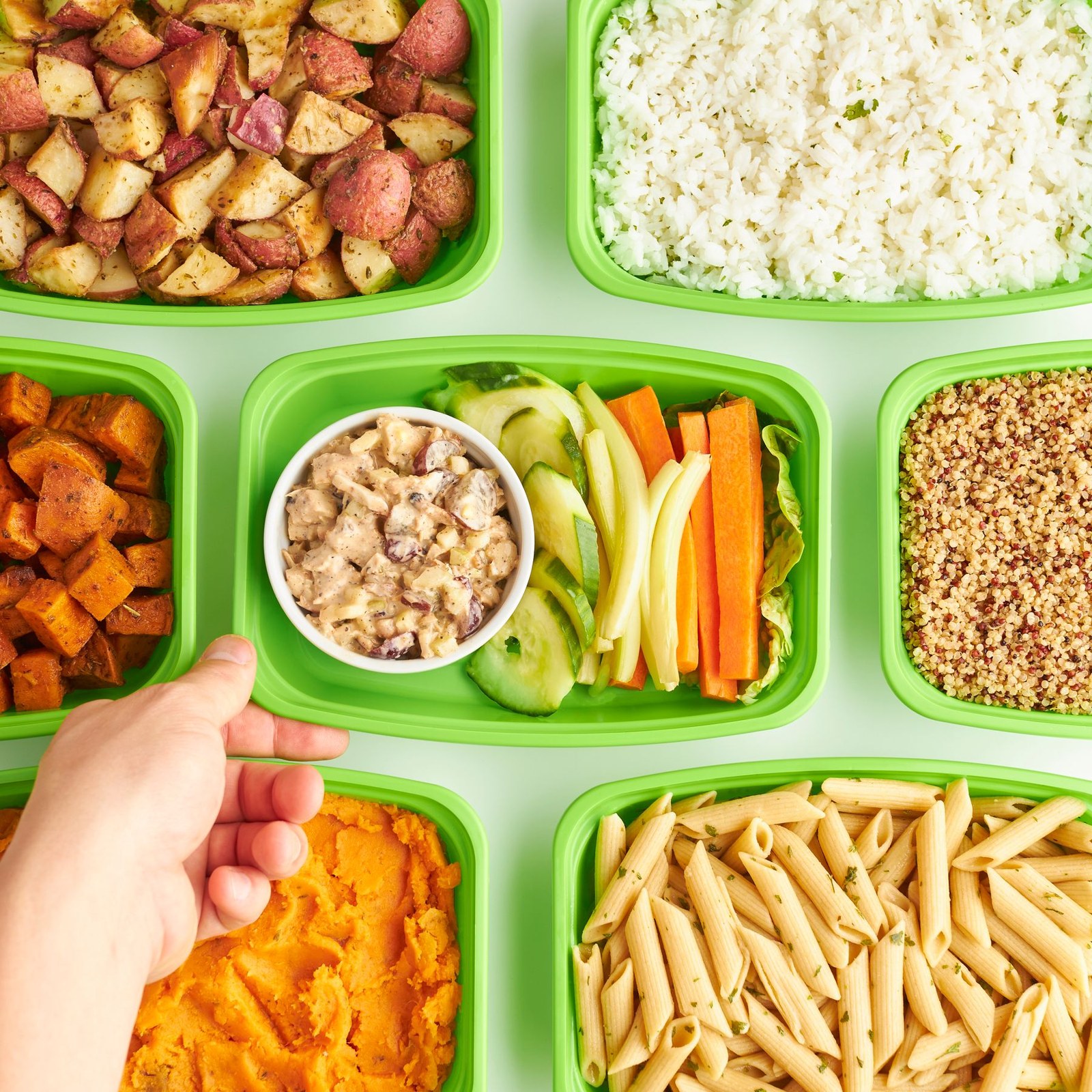
The number of containers you need is easier to work out from a normal week than from a multipack advertisement. Think about how many meals are stored at once, how often you take lunch out and when you actually wash the empty boxes.
For example, someone who cooks an evening meal, saves one portion and washes a lunch box each night may need only a few medium containers. Someone who freezes several portions after cooking needs additional freezer-suitable boxes, but those boxes will remain occupied until the meals are used.
Lay out the containers you already own with their matching lids. Remove damaged items and identify lids with no usable base. Before buying more, check whether the apparent shortage is really a pile of unmatched pieces or food forgotten at the back of the refrigerator.
Group the remaining containers by job: lunch, refrigerator leftovers, freezer portions and small ingredients. A container can serve more than one job if it is approved for the intended use. You do not necessarily need a dedicated product for each label.
Start with a modest combination, such as a few meal-sized boxes and one or two smaller pots, then observe what is missing. Treat that as a trial rather than a universal shopping list. Your serving sizes, household and refrigerator space should decide the final number.
Leave physical room for the lids. Nesting bases save space only if the lids have a place where you can find them. Similar shapes or a shared lid system may simplify storage, but check compatibility rather than assuming every size in a range uses the same closure.
An expanding collection can make it easier to postpone washing up or forget aging food. Label leftovers and keep a visible area for food that needs to be used. Buying another container does not extend the safe storage period of the meal inside it.
If you regularly run out of one size, add that size instead of another mixed set. If the cupboard is full but half the boxes never leave it, reduce the collection to the pieces that work.
The useful number is enough to support your real routine with a little breathing room. It does not need to match a photograph of a perfectly stocked refrigerator.