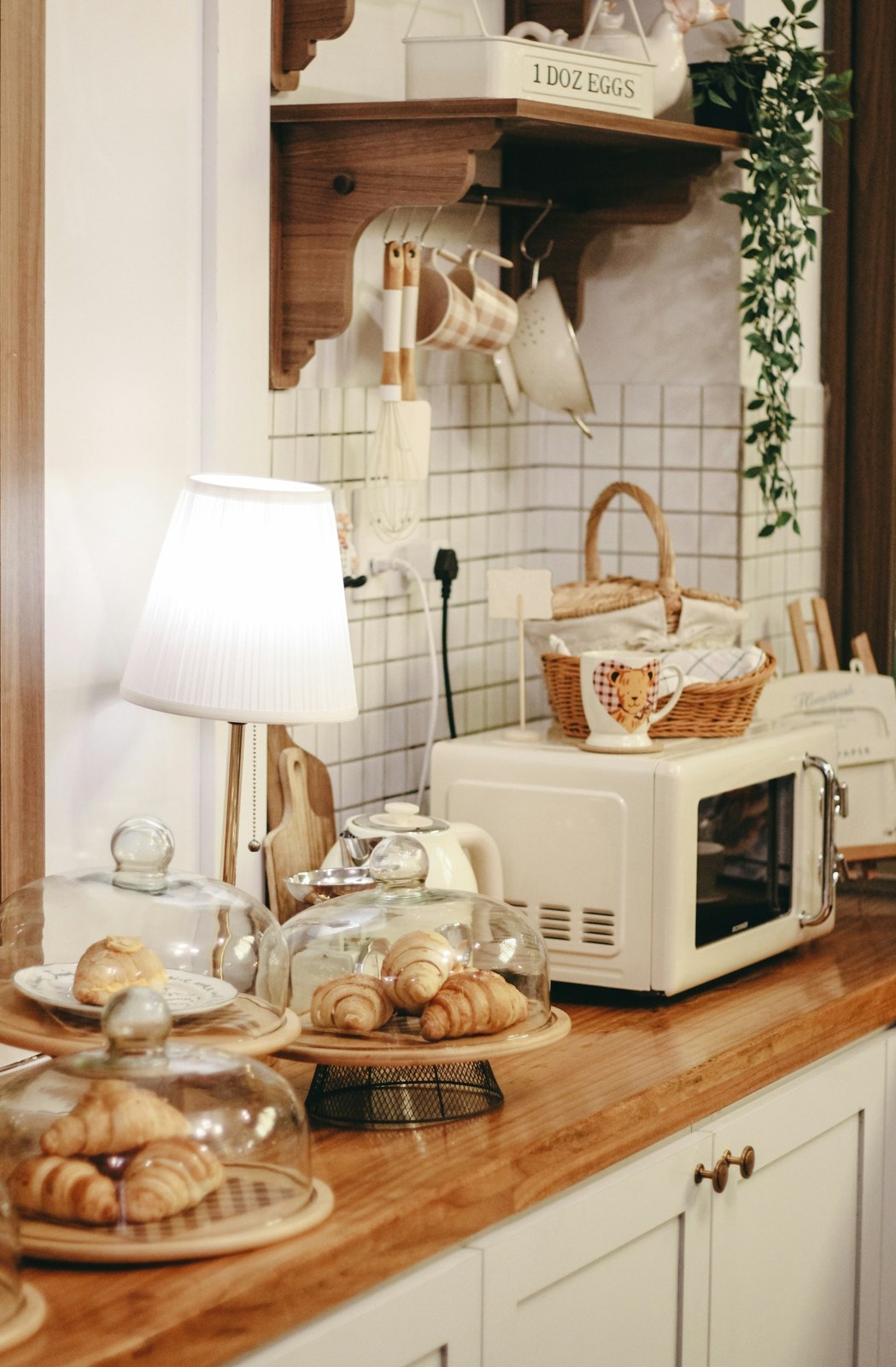
The most useful microwave controls are the ones you can understand while holding a bowl of lunch. Before buying, find out how to enter a short heating time, change the power level and stop the machine. Those three actions are likely to matter more often than an unfamiliar specialty program.
A rotary dial can feel direct, while a keypad can make a precise time easy to enter. Neither arrangement is automatically simpler for everyone. Check the size, contrast and position of the labels, especially if the microwave will sit above or below your usual eye level.
Know what the setting changes
Power levels can help manage how food heats, but the way a microwave delivers a lower setting depends on its design. Use the manual for the particular model rather than assuming the number on the screen describes identical behavior across brands.
Preset names are convenient shortcuts, not universal instructions for every portion. A large dense bowl, a shallow plate and a refrigerated container can need different handling. Covering, stirring, rotation and standing time may still be necessary, and a food thermometer is useful for checking reheated leftovers throughout.
Look at the add-time control and what happens when the door opens. Can you resume easily after stirring? Does a button begin heating immediately or merely add time to a program? Knowing that behavior reduces surprises during ordinary use.
Check the small interruptions
A clear end signal can be helpful, but consider whether its volume or repetition suits a shared living space. If you want to change or mute it, verify that the exact model offers that option. Do not assume a hidden setting exists because another microwave has one.
A control lock may help prevent unintended operation, yet it is not a substitute for appropriate supervision or safe placement. Learn how it is enabled and disabled so it does not become an unexplained problem for the next person using the kitchen.
Finally, read the display from where you will stand. A glossy panel that looks attractive in a listing can be difficult under your kitchen lighting. Good controls are not necessarily elaborate; they make the repeated actions clear and leave you free to pay attention to the food.