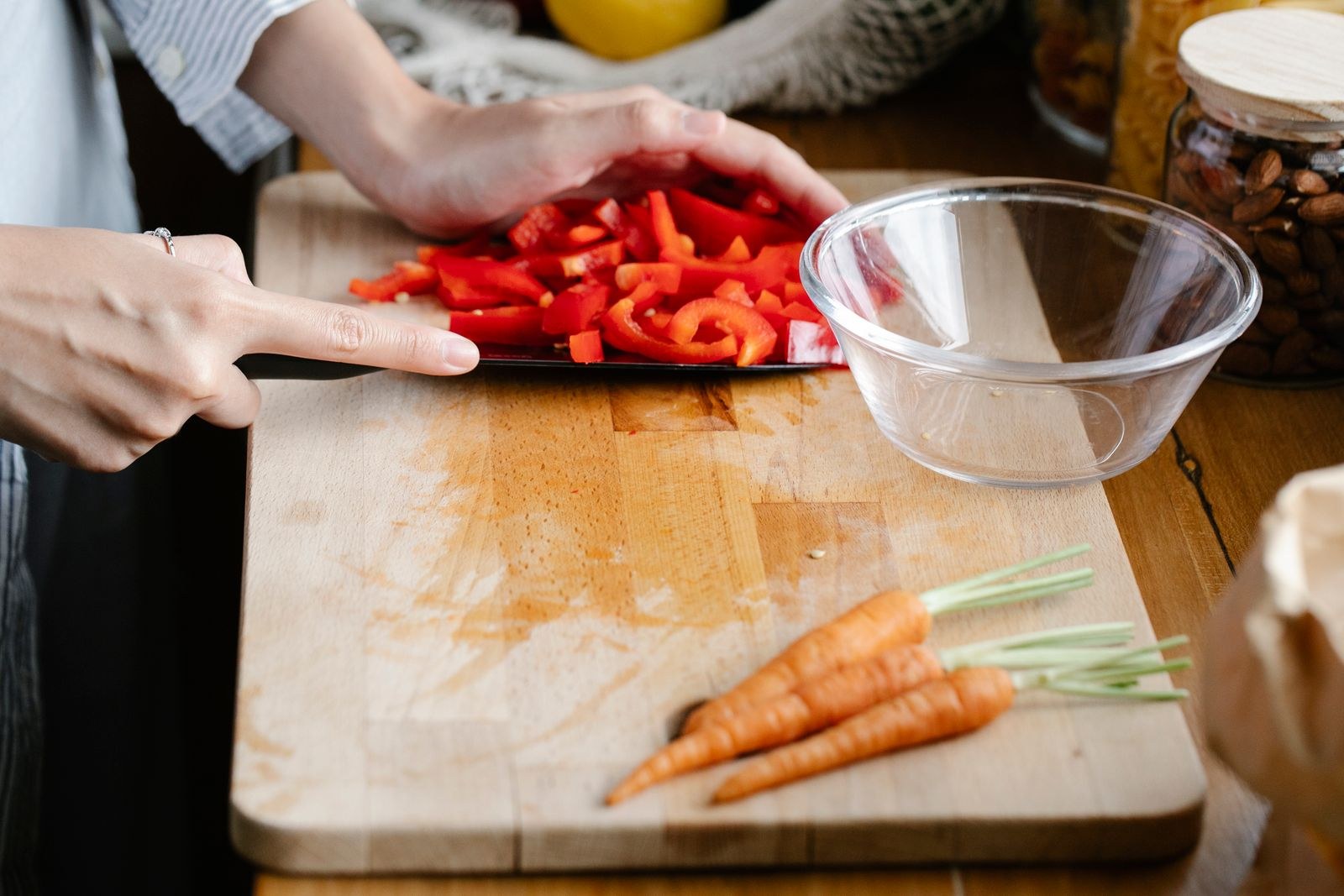
Preparing vegetables in advance can shorten dinner, but washing and chopping everything immediately is not always helpful. Some ingredients keep better whole, and cut pieces may need different storage from the intact vegetable. Start with the meals you expect to cook in the next few days.
Choose one or two tasks that regularly delay you. Washing salad greens, cutting sturdy vegetables for a planned tray bake or trimming ingredients for tomorrow's soup may be enough. Leave food unprepared when there is no clear use for it yet.
Keep preparation clean and purposeful
Wash produce under running water as appropriate, following any ready-to-eat package instructions. Do not use soap or household bleach on vegetables. Clean hands, utensils and work surfaces matter, particularly if the same kitchen is also used for raw animal foods.
Dry ingredients when the next cooking method benefits from it. Excess surface water can dilute a salad dressing or encourage steaming in a crowded pan. A clean towel or suitable drying method can be sufficient; you do not need a specialized device for every vegetable.
Cut pieces to suit the planned meal. Uniform size helps them cook together, but different vegetables may still need different cooking times. Keeping fast-cooking and slow-cooking ingredients separate gives you more control when they reach the pan.
Store prepared vegetables according to the food's needs and reliable storage guidance. Use clean containers, refrigerate perishable prepared items promptly and label them when the preparation date could become unclear. Do not assume that chopping a whole week's supply automatically means it will remain suitable for the entire week.
Stop before preparation becomes waste
If a recipe changes, use the prepared ingredients in another appropriate meal while they are still fresh and safely stored. A handful of chopped vegetables can join a soup or cooked grain dish, but cooking is not a way to rescue spoiled food.
Keep the session short enough that you will repeat it. Ten minutes spent preparing tomorrow's dinner may be more useful than a long Sunday routine that produces several boxes you forget.
The aim is to remove a specific obstacle from cooking. When the vegetables already in your refrigerator tell you what to make next, preparation is helping rather than adding another list of jobs.