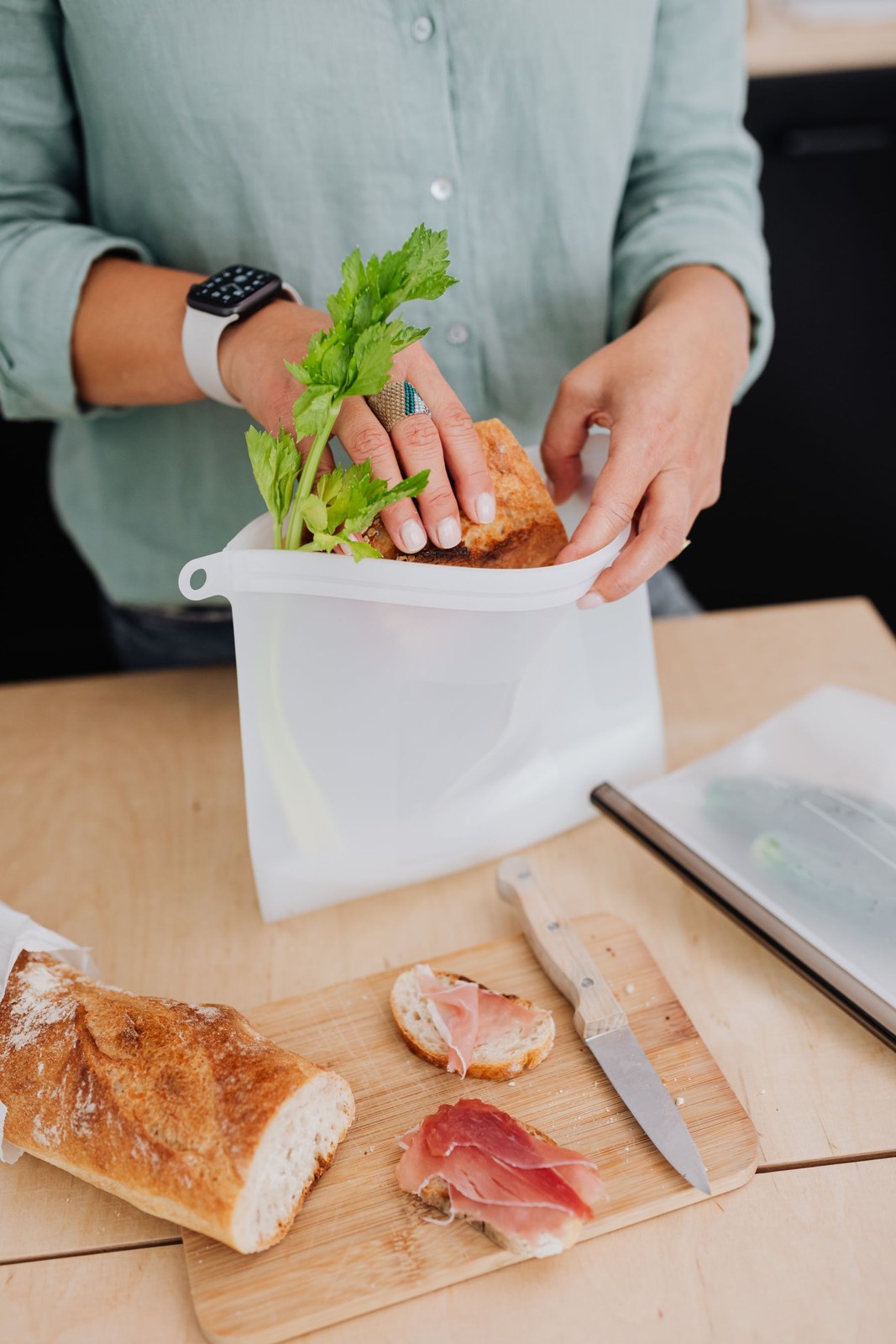
Reusable food bags and rigid containers solve different packing problems. A bag can flatten when empty and fit around irregular items. A box keeps its shape, which can protect a sandwich or stop a soft snack from being crushed under the rest of your lunch.
Start with the food and the journey. Dry snacks may suit a simple reusable pouch, while sauces require a closure specifically intended to hold liquids. Do not assume that every washable bag is suitable for hot food, freezing or reheating.
Read the use and cleaning limits
Check the material's approved uses, temperature restrictions and cleaning instructions. Some bags can be turned inside out; others should not be. Seams and closure channels need attention because residue can remain after the broad surfaces look clean.
Drying can be the deciding issue. A bag that collapses closed may retain moisture unless it is supported open as directed. Make sure you have a practical drying position before buying several. A rigid container may take more cupboard space but be easier to inspect and dry.
Boxes often stack more predictably in a refrigerator, while bags may fit into smaller gaps. Neither should be crammed into a position that prevents proper closure or damages the food. For frozen liquids, follow the product's filling and expansion guidance rather than squeezing in the maximum amount.
Consider how you will eat the meal. A rigid bowl can serve as the eating vessel, while a bag of ingredients may need to be emptied onto a plate. That extra step matters if your lunch location has no dishes or sink.
Reuse needs a routine
Keep raw ingredients and ready-to-eat foods separate as appropriate, and clean food-contact items thoroughly between uses. Do not keep using a bag with damaged seams or a container with a cracked surface simply because it is marketed as reusable.
Count the pieces you can realistically wash and dry. A small number of durable items used consistently can be more manageable than a drawer full of specialized formats. Environmental comparisons depend on materials, manufacturing and how often products are used, so avoid assuming that the word reusable settles every question.
A mixed setup often works: rigid boxes for meals and a few flexible bags for suitable snacks or ingredients. Let repeated use reveal which format deserves more space.