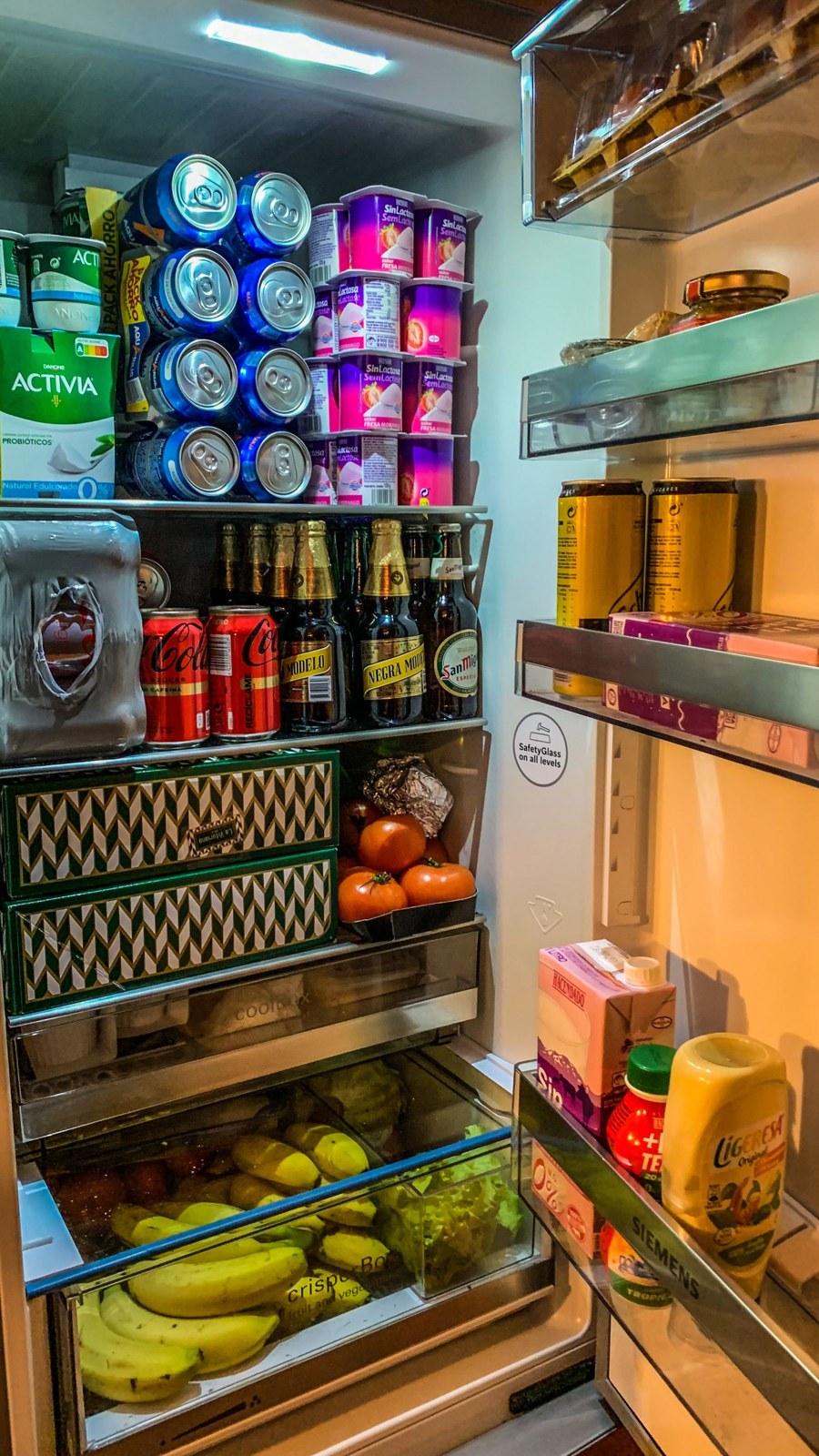
One refrigerator shelf can hold a surprising amount if the food is easy to identify and retrieve. Start by agreeing which shelf or section you may use. In a shared kitchen, that conversation matters more than buying organizers before you know the available space.
Check the refrigerator temperature with a suitable appliance thermometer. Perishable food needs storage at 40°F or below. A personal shelf is not a separate temperature zone, and a crowded or poorly functioning refrigerator affects everyone using it.
Put the frequent items within reach
Keep the food you use daily near the front, with less frequently used items behind it where appropriate. Avoid arrangements that require lifting several heavy containers whenever you want milk or lunch. Clear sight lines help prevent food from being forgotten.
Use shallow containers for cooked leftovers and label them with contents and dates. Separate raw animal foods securely from ready-to-eat items and store them to prevent drips, following food-safety guidance and the refrigerator's layout. Do not let an ownership agreement override safe storage positioning.
A small washable bin can group loose items, but it also uses space and can conceal spills. Choose one only if it solves a real problem. Check that it does not block air circulation or prevent the door from closing correctly.
Leave room for tomorrow's leftovers before buying groceries. Filling every gap with unopened jars makes it harder to cool and store a cooked meal safely. A little empty shelf space is useful working capacity, not wasted storage.
Make the shared rules specific
Agree how people will identify their food, handle spills and deal with abandoned items. A date and name on a box can reduce uncertainty. Avoid quietly discarding another person's food based only on its appearance; establish a clear household process while still addressing obvious contamination or unsafe storage promptly.
Clean your section regularly using the refrigerator manufacturer's instructions. Remove food temporarily only as needed and return perishables promptly. Wash any organizing bins and dry them before replacing them.
Review the arrangement after a week. If you keep moving the same oversized bottle or losing small pots at the back, change that part of the setup. A useful shelf is one that fits the way you eat and the people you share it with.