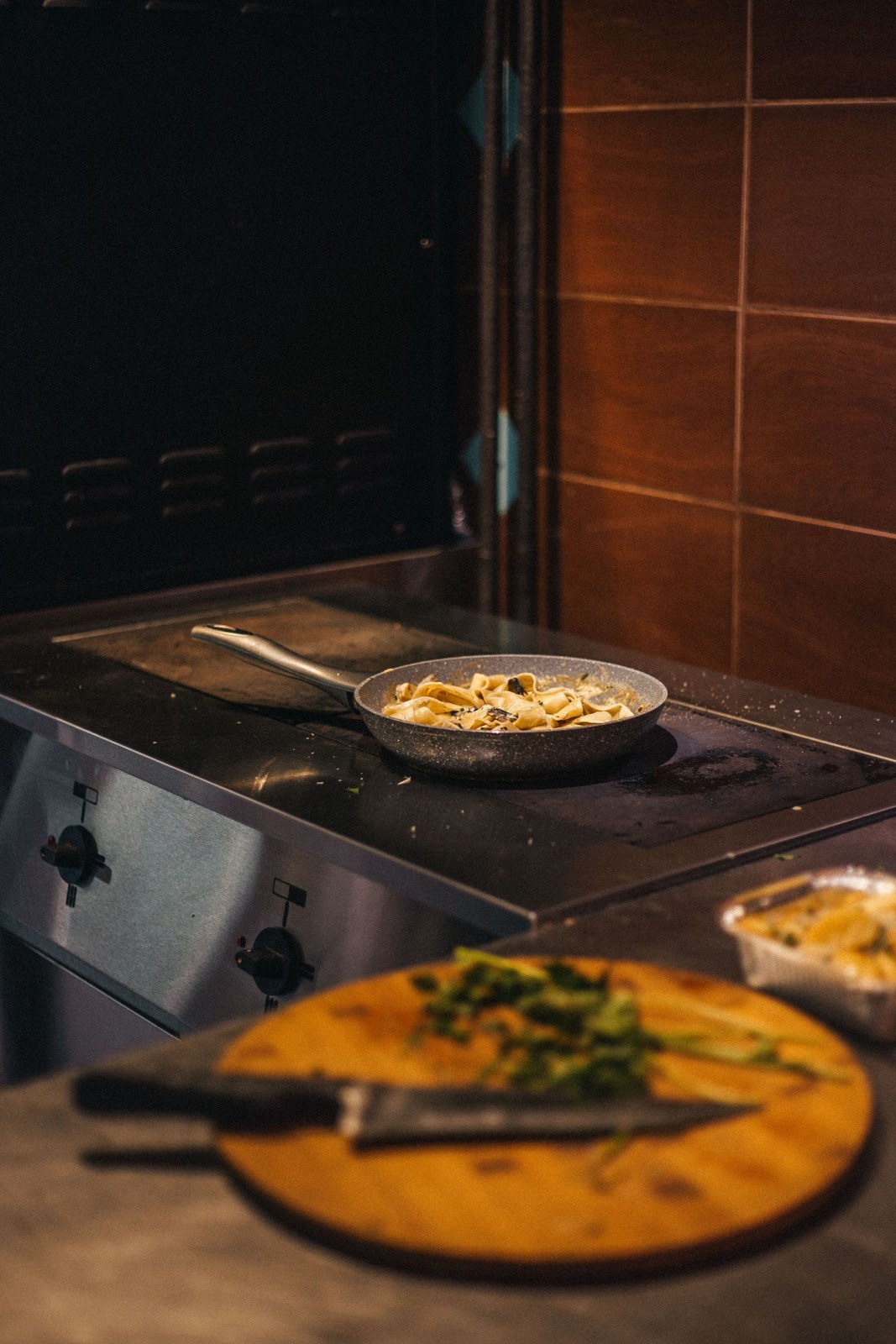
A saute pan and a frying pan can overlap enough to make owning both unnecessary in a first kitchen. The useful distinction is usually shape. Frying pans commonly have sloping sides, while saute pans tend to have straighter sides and often come with a lid. Product names vary, so inspect the actual design.
Imagine your last few dinners. If you mainly cook eggs, small portions of vegetables or food you want to turn with a spatula, sloping sides may make access easier. If you often combine cooked ingredients with a sauce, the extra containment of straighter sides may be welcome.
Compare what fits on the bottom
The rim diameter does not equal the flat cooking area. A straight-sided pan can offer a different amount of usable base than a sloped pan with a similar measurement. For food you want to spread out, compare the interior dimensions instead of relying on the number in the title.
Depth is helpful for containing liquid, but it is not an invitation to fill the pan close to the edge. Allow space for stirring and transferring food. Check how the handle feels when the pan contains the amount you expect to cook; a broad pan full of sauce can be difficult to lift with one hand.
A lid adds another cooking option, particularly when you want to retain moisture. It also needs somewhere to rest during cooking and somewhere to dry afterward. If the pan is sold without one, check for a suitable fit rather than assuming a lid from another set will work.
Decide which job happens most often
A saute pan can be a flexible choice for one-pan meals, but its size may make it awkward in a small sink. A frying pan may be easier to maneuver yet leave less room for a generous sauce. Your burner size and cupboard depth can settle the decision more quickly than a long feature list.
Compare material, coating and oven limits separately from shape. Straight sides do not make a pan oven-safe, and a metal-looking handle is not proof of a particular temperature rating. Read the whole product's instructions.
Choose the pan that removes the most frequent inconvenience in your cooking. If you rarely need the second shape, borrow or adapt an existing pot for an occasional task before dedicating another shelf to it.