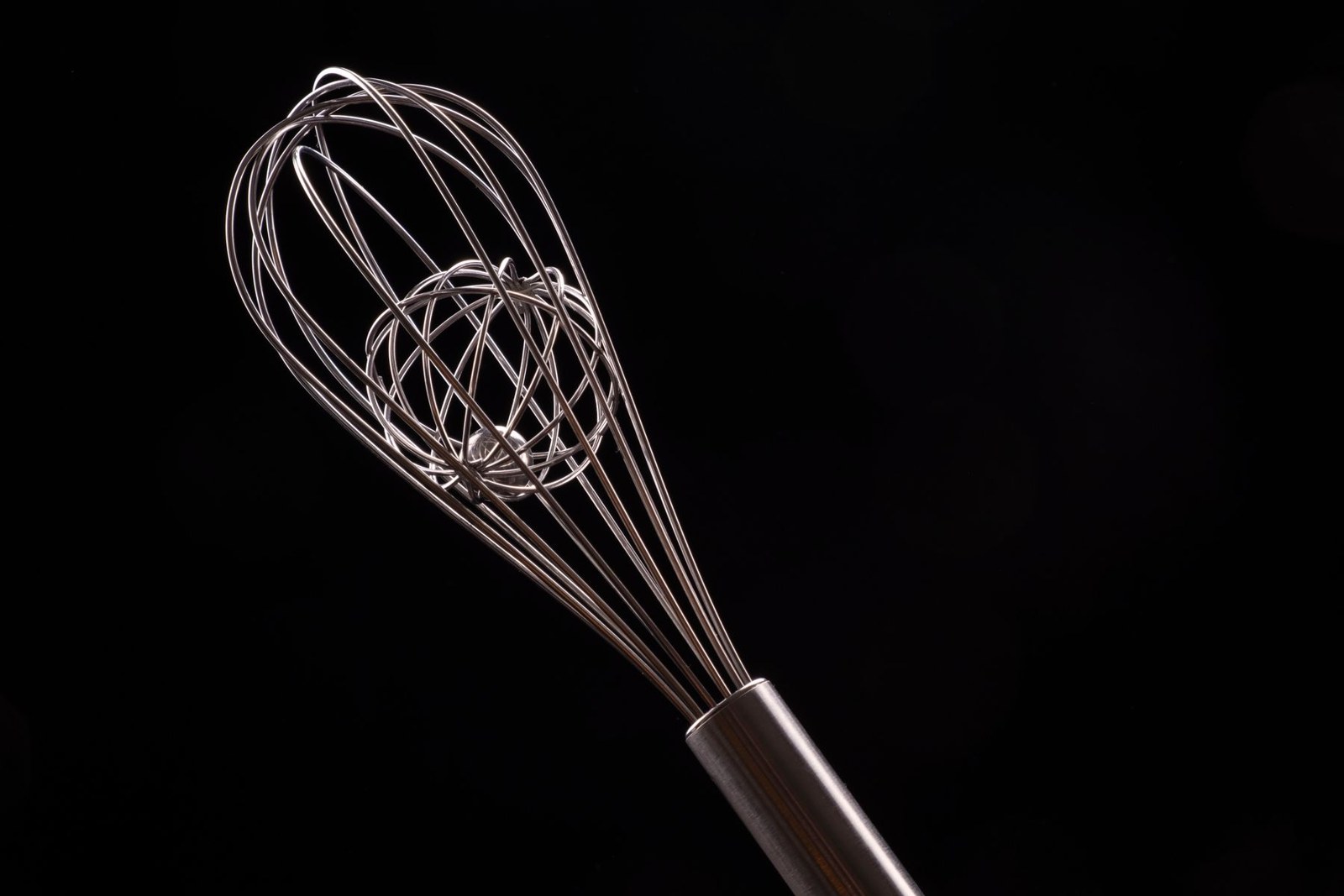
Whisks come in shapes that look specialized, but a first purchase can be straightforward. Think about whether you mostly beat eggs, combine a sauce or mix a small bowl of batter. The whisk needs room to move in that container without scattering the contents across the counter.
A balloon-style whisk has an open, rounded shape that can work well in a bowl with enough space. A narrower profile may be easier in a small jug or saucepan. A flat whisk has a different relationship with a pan's bottom. None is automatically the right tool for every mixture.
Fit the whisk to the container
The head should reach the areas where ingredients collect. If it is too broad for the base of a small saucepan, you may leave an unmixed ring around the edge. If it is tiny compared with a large bowl, the work may take more movement than necessary.
Check the handle length and how the joint is constructed. A handle that feels comfortable dry may be less secure when wet or greasy, so keep it clean as you work. Wires should be firmly attached and free of damaged or sharp areas.
The utensil must also suit the cookware surface. Bare metal wires may not be appropriate for a coated pan. Covered wires need a suitable temperature rating and should be inspected for damage; a soft coating does not mean the tool can tolerate any heat.
Know when another tool is simpler
A fork may be adequate for a small amount of egg, while a spatula can be better for folding a mixture you do not want to aerate heavily. A whisk is not a substitute for every stirring tool. Thick dough can strain a lightweight wire head and become difficult to remove.
After use, wash between the wires before residue hardens. Follow the product's cleaning directions and let water drain from any areas around the handle. A complex head that is unpleasant to clean may discourage you from using it for small jobs.
Buy one size that fits your usual bowl and pot. If a second shape becomes necessary, it should solve a specific limitation. A large collection of whisks is less valuable than knowing which motion and tool the recipe actually needs.