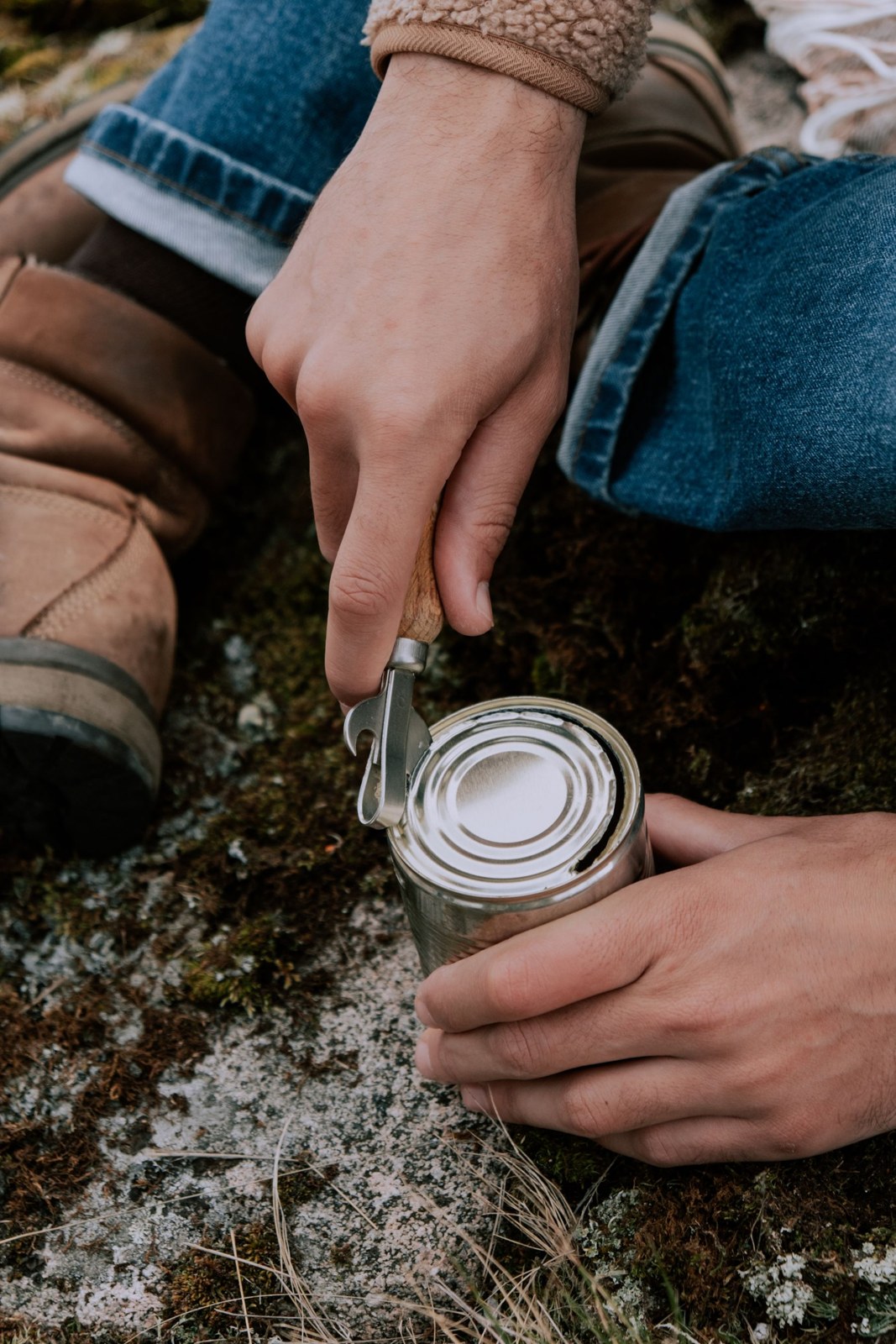
A can opener is a small purchase that can become a daily frustration if the handles are uncomfortable or the mechanism repeatedly loses its grip. Choose it around the cans you open and the way your hand moves. A familiar-looking shape does not guarantee a comfortable turning action.
Manual openers use different cutting arrangements. Some cut through the lid from above; others work around the side seam. The resulting edge and lid handling can differ, but do not assume any cut metal is safe to touch casually. Follow the tool's instructions for removing and disposing of the lid.
Check the work your hands have to do
Look at the size of the turning knob and the pressure needed to hold the handles together. A small knob can be awkward for someone who finds gripping difficult. An electric opener may reduce some manual effort, but it introduces its own space, power and cleaning requirements.
Check whether the design supports the can securely and whether it works with the shapes you normally buy. A tall can or unusual rim may be less convenient with a compact tool. If a store permits a demonstration, watch how the opener starts and finishes rather than only how quickly it turns.
A magnet or lid-lifting feature can be helpful when it is part of the intended design. It should not encourage reaching toward a sharp edge with your fingers. Keep the work area clear so the removed lid can go directly to an appropriate disposal place.
Clean the cutting mechanism
The wheel and nearby surfaces can contact food or residue from the can. Wash or wipe them according to the instructions, and dry the tool before storage. An opener that looks clean on its handles can still need attention around the cutting parts.
Inspect for damage, rust or a mechanism that no longer engages reliably. Repeatedly forcing a failing opener can make a simple task less controlled. Extra bottle-opening features do not compensate for poor performance at its main job.
Choose an opener that is easy to locate in the drawer and comfortable for the people who share the kitchen. It is a better place to spend a little attention than another gadget that only comes out for an occasional recipe.