A cutting board has to fit two places: the counter where you prepare food and the sink where you clean up. A large board can make chopping more comfortable, but not if you cannot wash it thoroughly or leave it somewhere to dry. In a shared kitchen, storage and cleaning habits are part of the choice.
Put your usual ingredients in mind before comparing dimensions. You need room for the food being cut, the pieces already prepared and a clear path for the knife. A small decorative board may work for serving while offering too little space for ordinary preparation.
Stability comes before extra features
Place a board on a clean, level surface and check for rocking or sliding. Non-slip feet or a suitable stabilizing method can help, but the underside still needs cleaning. A warped board should not be treated as stable simply because it is heavy.
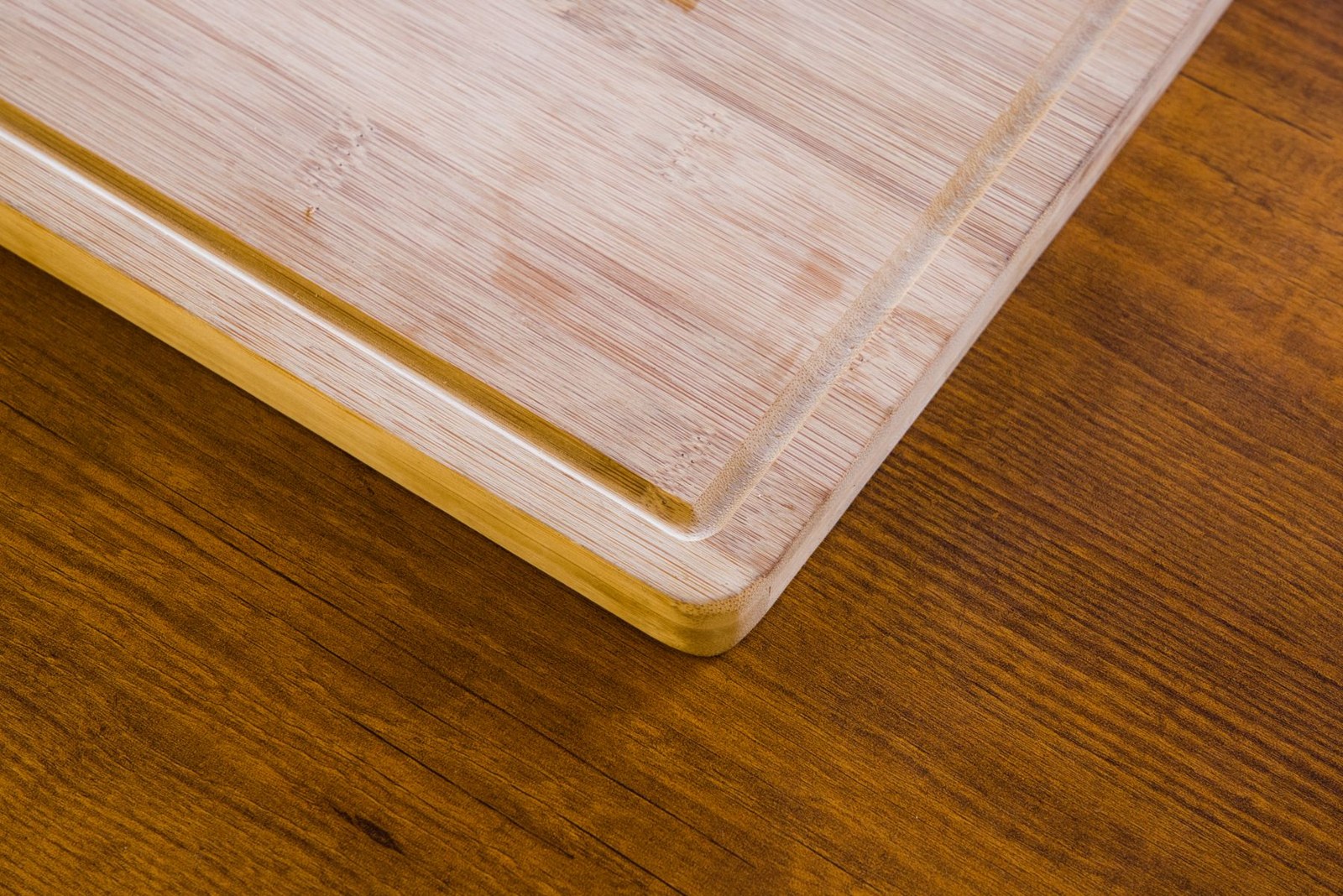
Juice grooves can contain some liquid, yet they also reduce the flat working area and need attention during washing. Handles, hanging holes and folding designs add other places to clean. Choose those features for a job you actually have rather than assuming more detail makes a board better.
Material affects care. Some boards can go in a dishwasher while others need hand washing and prompt drying. Follow the instructions for the exact product. Wood, plastic and composite labels alone do not establish every cleaning method or heat limit.
Agree on shared use
Food-safety routines should be clear when several people use the kitchen. Keep raw animal foods from contaminating foods that will be eaten without further cooking, using separate equipment where appropriate and cleaning thoroughly between tasks. A colored board is useful only if everyone understands what the color means.
Inspect the surface over time. Deep damage or areas that cannot be cleaned properly are reasons to reconsider using the board. Do not assume a quick rinse removes food residues from grooves or that a board is clean because it looks dry.
Store it so both surfaces can dry instead of trapping moisture beneath a pile of cookware. For many student kitchens, a manageable board used and cleaned consistently is a better investment than an oversized statement piece. Choose enough working room, but make sure the cleanup routine fits the same space.