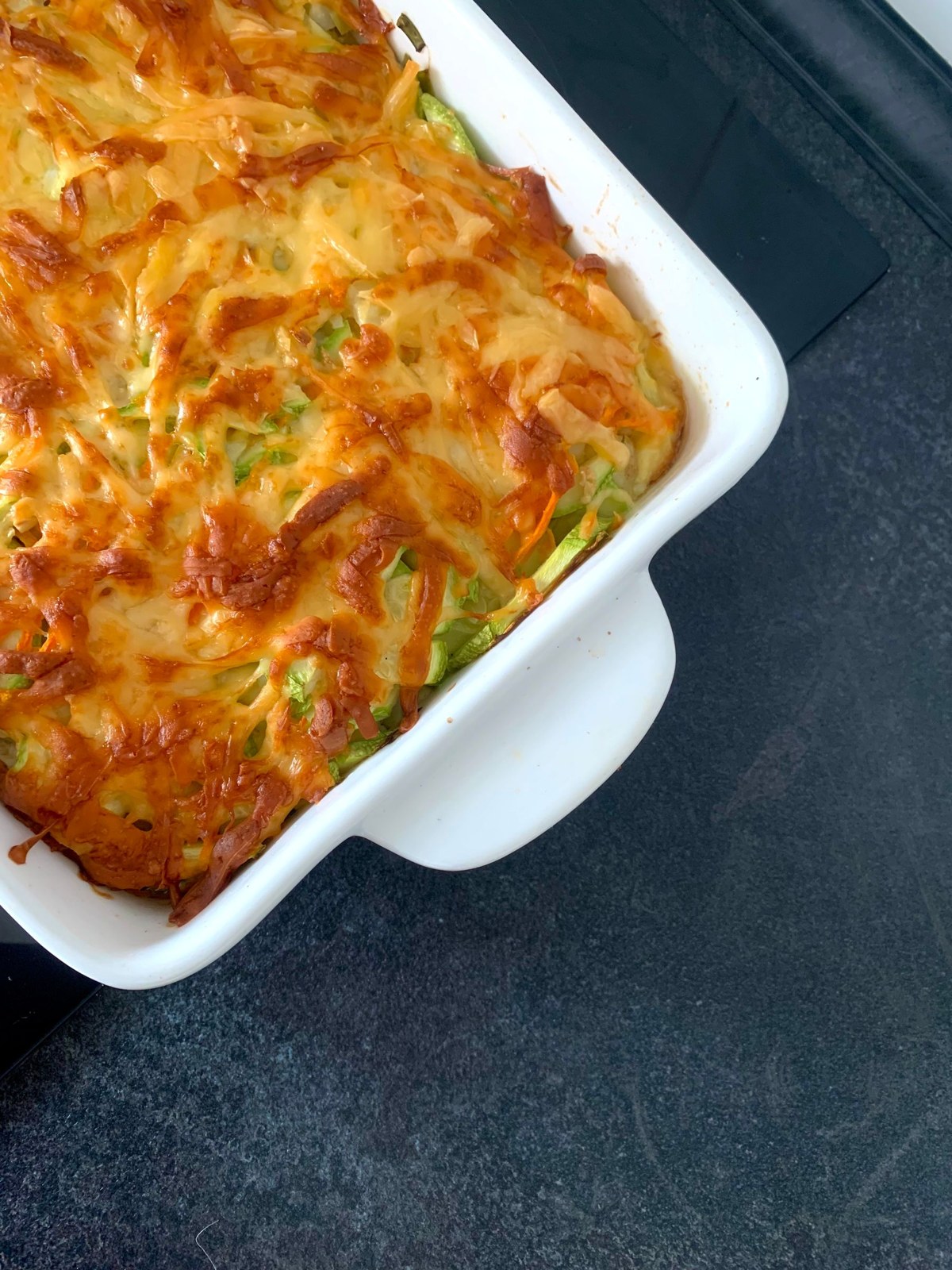
A baking dish for a small household should make a modest meal look like a sensible quantity, not a thin layer spread across a family-sized tray. Start with the food you plan to cook: vegetables, a pasta bake, a crumble or leftovers that need reheating. The shape and depth influence how those portions sit in the dish.
Check the interior dimensions. Handles and decorative rims can make the outside much larger than the space available for food. You also need room to hold the dish with oven mitts and to set it on a suitable surface afterward.
Read the permissions separately
Oven-safe does not automatically mean suitable for a broiler, stovetop, microwave or countertop appliance. Glass, ceramic and metal products have different restrictions, and even products made from the same material can have different instructions. Use the exact manufacturer's guidance rather than inferring permission from appearance.
Current US Pyrex instructions, for example, exclude countertop appliances. That means a glass dish that works in a conventional oven should not automatically be put in an air fryer or toaster oven. A small footprint alone does not establish compatibility.
Temperature changes deserve the same attention. Do not assume a frozen or refrigerated dish can go directly into a hot oven. If the recipe involves chilling, freezing and baking in the same container, confirm that sequence is allowed or transfer the food to suitable cookware.
Think about the complete journey
Measure the oven rack, sink and storage location. A dish needs to fit without touching surfaces it should stay clear of, and its handles need to remain accessible. For a small oven, the manufacturer's clearance requirements may rule out a dish that appears to fit when the door is open.
A lid can help with storage or transport, but a plastic cover may not share the dish's heating permissions. Keep track of which components can go into the oven, microwave or dishwasher. Do not use a loose cover as a carrying handle.
For the first purchase, choose a shape that serves your usual meal and is straightforward to wash. A slightly deeper dish can accommodate some foods well, but depth does not replace the surface area needed by others. Buy another size when a recurring recipe calls for it, not simply to complete a set.