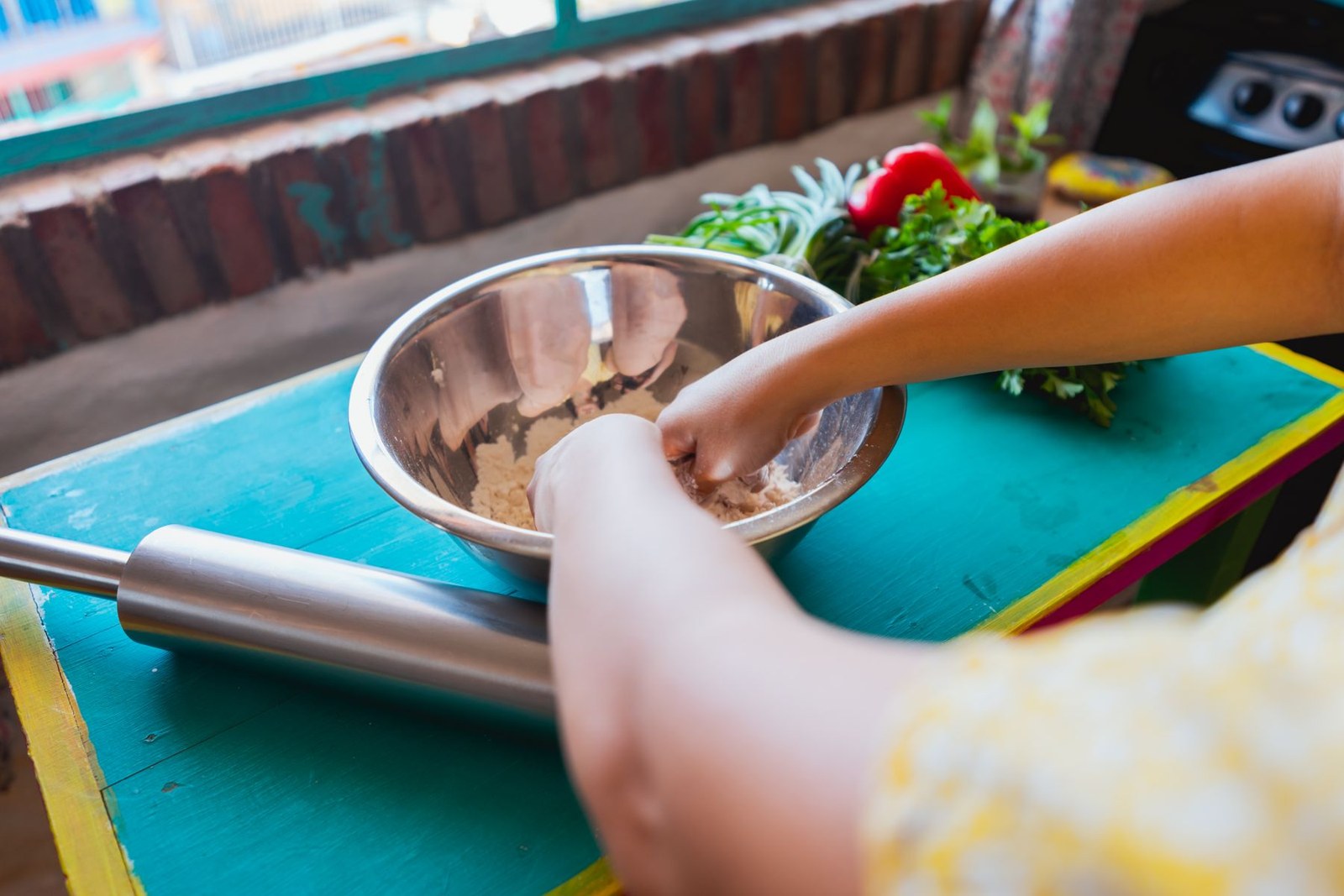
Mixing bowls are sold in sets that can look efficient because they nest. Nesting helps with storage, but the set still needs to contain sizes you will use. A very small bowl and an enormous one may leave you reaching for an unrelated container when preparing an ordinary dinner.
Begin with the largest mixture you make regularly. A bowl needs room above the ingredients for stirring or tossing, not merely enough volume to contain them. A salad that fills the rim before dressing is added has no useful mixing space left.
Consider the shape of the inside
A rounded interior can make it easier to reach the corners with a spatula. A narrow base may fit compact storage but feel less stable during vigorous mixing. Compare the base contact and the weight before assuming a deep bowl is the most convenient shape.
A non-slip base can help on the counter, provided it is clean and compatible with the task. It does not turn a bowl into heatproof cookware. Check microwave, oven and dishwasher permissions separately, including any base material and lid.
Metal bowls may be light and easy to handle, while glass or ceramic can feel substantial. Those are broad material tendencies rather than guarantees for every product. Lift the exact bowl when possible, remembering that its contents will add weight.
Lids and measurements are optional benefits
A lid can make a bowl useful for holding prepared ingredients, but it may not be leakproof or suitable for the same heating conditions as the bowl. If you plan to store leftovers, check whether the size is practical for safe cooling and refrigerator space rather than leaving a large batch in a deep mixing bowl.
Printed measurements can be convenient for rough reference. They do not replace a scale or a suitable measuring jug when a recipe depends on accuracy. Marks also need to remain readable after ordinary washing.
Choose a nesting arrangement you can separate without struggling. Keep the bowls dry before stacking, and protect any surfaces the manufacturer says need protection. Two well-used sizes may be enough at first. Add another when you repeatedly need to hold ingredients separately, rather than buying a tall stack for its piece count.