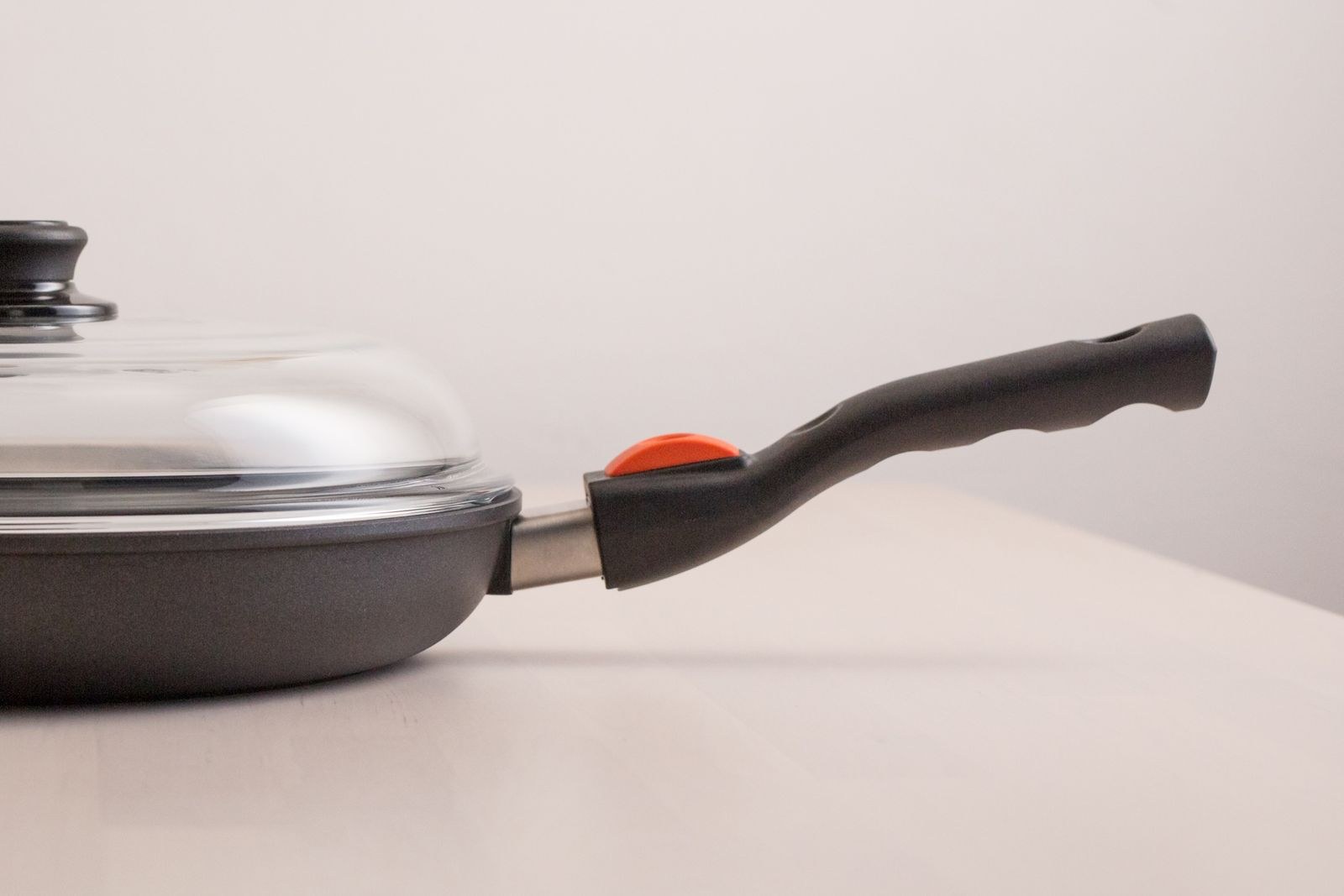
Let a nonstick pan cool as directed before washing. Plunging a very hot pan into cold water can stress the materials, and handling it too soon risks burns. The exact care instructions belong to the manufacturer, since coatings and construction vary.
Remove loose food with an appropriate utensil or soft cleaning tool. Use the recommended detergent and water temperature, and avoid abrasive pads or cleaners that the maker prohibits. Scrubbing harder is not a good substitute for choosing the right method.
Deal with residue without forcing it
If food is stuck, use a permitted soaking or gentle cleaning method. Do not assume that every pan can soak indefinitely or go through a dishwasher. A dishwasher-safe label may still come with care advice intended to preserve appearance or performance, so read the details.
Clean around the rim and handle attachments as well as the broad cooking surface. Grease can remain in those areas even when the center looks clean. Rinse and dry the pan appropriately before storage.
Inspect the coating for damage. A scratched or peeling surface is different from ordinary food residue and cannot be repaired by adding more oil. Follow the manufacturer's advice on when to stop using the pan rather than trying to resurface it at home.
Prevent the next problem
Use utensils compatible with the coating, and avoid cutting food directly in the pan. Follow instructions on cooking heat and do not leave the empty pan heating for a long period. Overheating can damage cookware even if the next wash is gentle.
When stacking, protect the cooking surface with a suitable separator and avoid heavy or rough items scraping across it. Make sure the pan is dry first so the stack does not trap moisture.
Some cooking sprays or methods can leave residues that are difficult to remove on particular coatings. Check the pan's guidance before making them part of the routine. A little appropriate cooking fat used as directed may be a different situation from repeatedly applying a spray that the maker discourages.
If cleaning becomes difficult after every meal, revisit the heat level, food quantity and utensils as well as the washing method. Care starts while the pan is on the stove, not only when it reaches the sink.