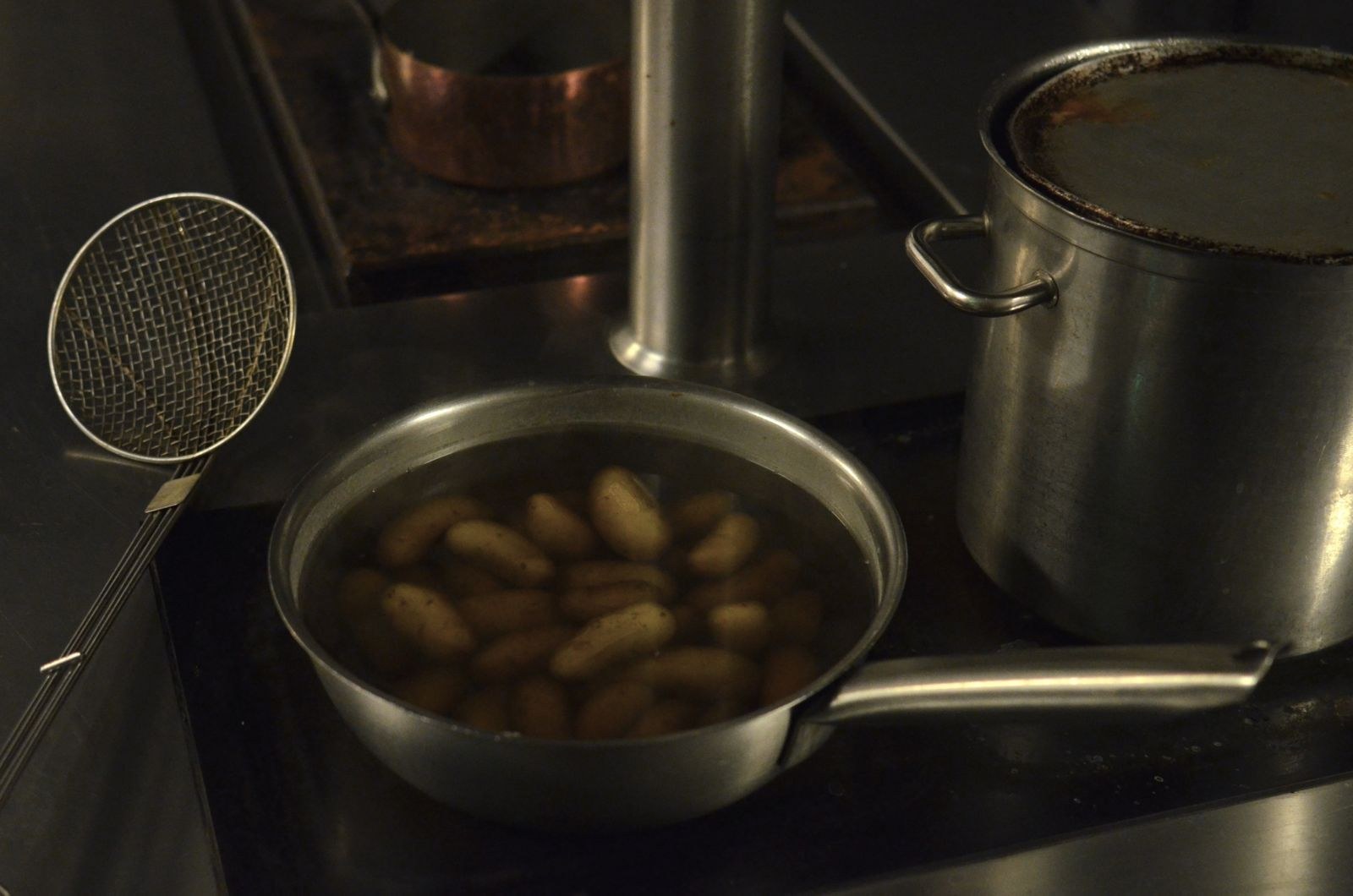
A stainless-steel pan often looks less tidy after dinner than before, but discoloration does not always mean damage. Begin with the manufacturer's care instructions and let the pan cool enough for safe cleaning. Avoid sudden temperature changes that the maker warns against.
Remove loose food, then wash with suitable detergent and a non-damaging sponge or brush. Rinse and dry the pan to reduce water marks. Clean the exterior and handle area as needed, not only the cooking surface.
Give stuck food time
For stubborn cooked-on residue, use a soaking or other method approved for the pan. Allowing the residue to soften can reduce the force needed to remove it. Do not reach immediately for a harsh abrasive that could mark the finish or damage other components.
Some manufacturers recommend particular cleaners for stainless steel. Follow the product and pan directions, including rinsing requirements and any restrictions on contact time. Do not mix cleaning chemicals or improvise combinations from unrelated household products.
A rainbow-like appearance or pale mineral marks may need a different approach from burned food. Identify the issue using the maker's guidance instead of treating every mark as grease. Cosmetic changes and a damaged cooking surface are not the same problem.
Protect the parts beyond the steel
Handles, rivets, bonded bases and lids can have separate care limits. A pot described as stainless steel may still contain materials that require different treatment. Check dishwasher suitability for the whole item rather than assuming the metal name settles it.
Inspect for loose handles, sharp damage or a base that has become distorted. Cleaning cannot correct a structural fault. Stop using unsafe cookware and seek appropriate replacement or support.
After drying, store the pan so that it can be removed without scraping against other equipment or falling from an unstable stack. A lid stored separately may make access easier in a small cabinet.
If food burns onto the surface regularly, review cooking technique as well as cleanup. Excessive heat, a crowded pan or a sauce left unattended can create repeated cleaning work. A controlled cooking temperature and timely deglazing where appropriate may leave less residue to tackle afterward.
The aim is a clean, sound pan ready for the next meal. It does not need to look untouched after every use, and aggressive polishing is not necessarily better care.