Pasta water is easiest to save when you plan for it before draining. Put a heat-safe cup or other suitable vessel near the stove while the pasta cooks. Having it ready prevents a last-second search while you are holding a heavy pot of boiling water.
Read the sauce method to see whether it calls for reserved water and roughly how much. You may use only a little, but saving a manageable amount gives you room to adjust. Use a vessel and utensil designed to handle hot liquid safely.
Take the water first
Shortly before draining, carefully scoop some cooking water into the prepared vessel using a safe method. Keep hands away from steam and avoid overfilling the cup. Place it where it cannot be knocked over or mistaken for a cold drink.
Set the colander securely in an appropriate position before lifting the pot. Clear the sink and make sure the drainage route is unobstructed. If the pot is too heavy to handle safely, do not attempt to control it with a towel slipping around the handles; use a safer method or cook a smaller quantity next time.
Drain carefully with suitable heat protection, directing steam and hot water away from your body. A colander held loosely in one hand while you manage a large pot in the other may be less stable than setting it down securely.
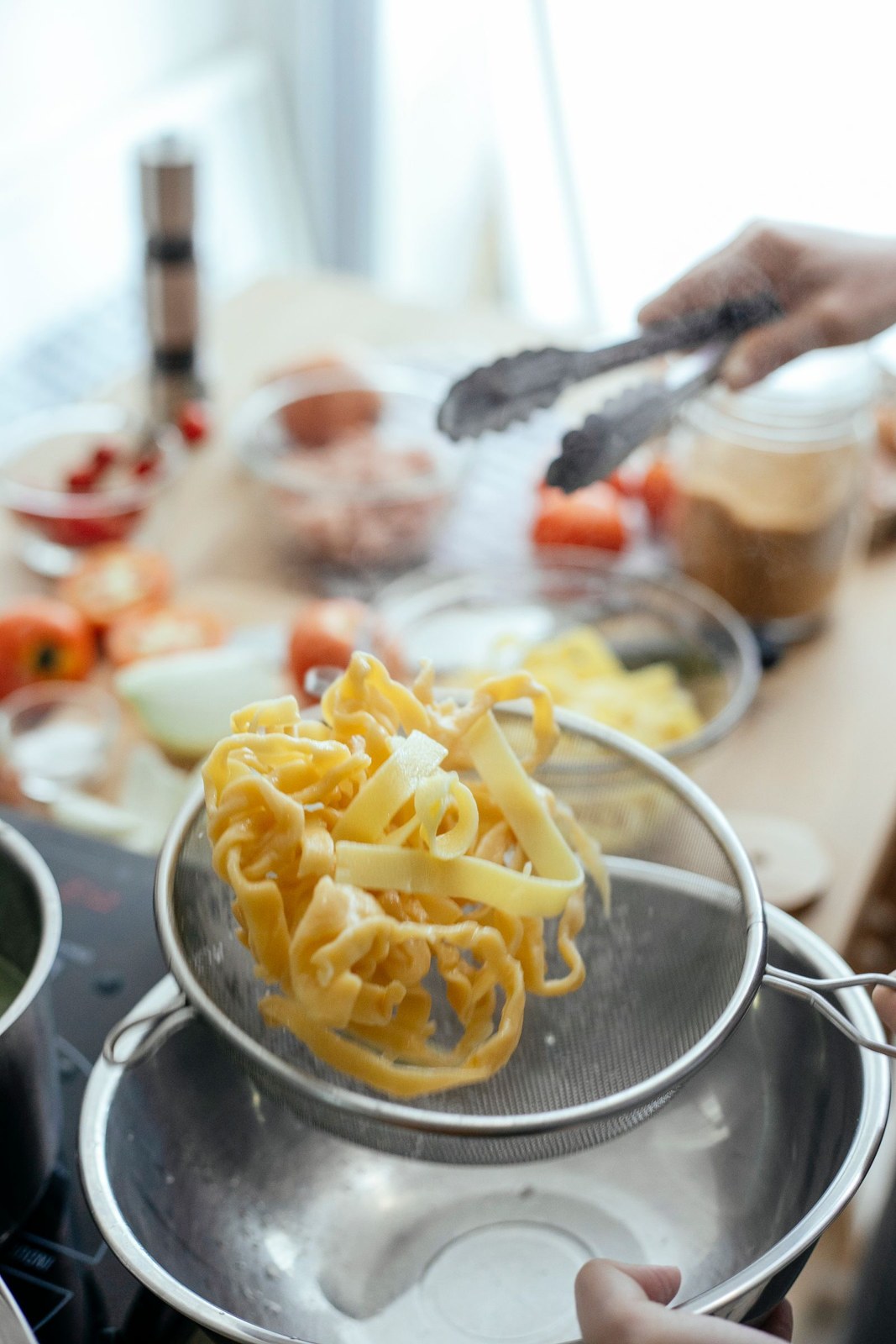
Some recipes transfer pasta directly into the sauce with tongs or a suitable scoop. That can carry a little water along, but it must still be done safely and with utensils appropriate to the pasta shape and hot liquid.
Add the reserved water gradually
Starchy water can loosen a sauce and help it coat the pasta when combined with the recipe's other ingredients. Add a small amount, toss or stir, then assess the texture. Pouring all the saved water in at once can leave the meal diluted.
Remember that salted cooking water adds seasoning too. Taste where safe before adding more salt to the finished sauce. The required amount varies with the pasta, sauce and how long the food continues cooking together.
Discard unused reserved water safely after the meal preparation. The habit to keep is simple: prepare a vessel, reserve water before draining and add it in stages. It removes the need to improvise around a hot, full pot.