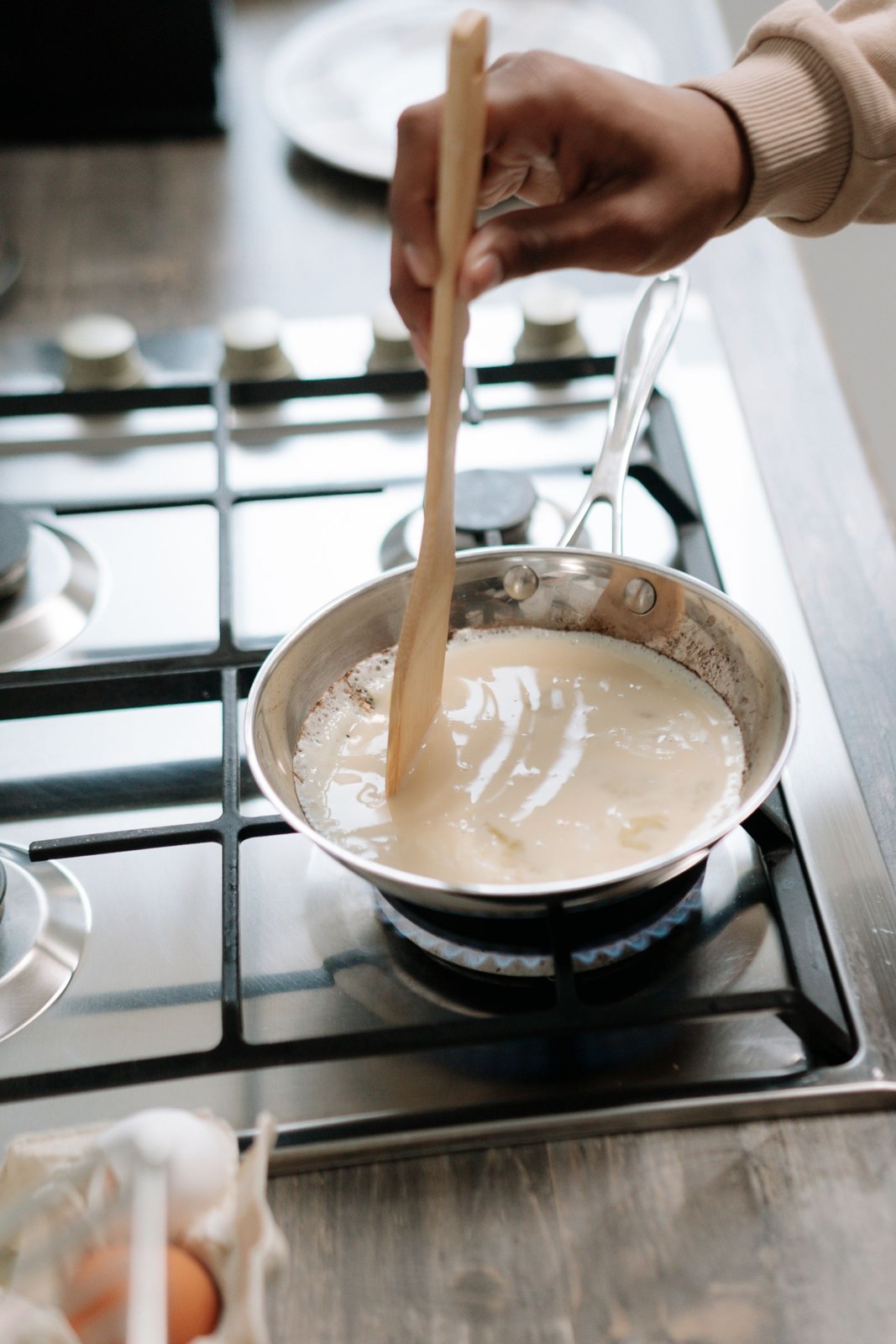
After sautéing food, a pan may hold browned deposits that can contribute flavor to a sauce. These deposits are often called fond. They are useful when pleasantly browned, but black, burned residue can make a sauce bitter and should not automatically be incorporated.
Transfer the cooked food to an appropriate clean plate if the recipe calls for it. Assess the pan before adding anything. Reduce heat as needed and handle excess hot fat safely according to the cooking method; do not pour it into a sink or add liquid carelessly to a dangerously hot pool of oil.
Loosen the browned bits
Add a suitable amount of the recipe's liquid carefully, allowing for steam and bubbling. Stock or water can work in many simple sauces. Use an appropriate utensil to gently loosen the browned residue without damaging the pan's surface.
Let the liquid simmer and reduce if you want a more concentrated sauce. Watch its consistency rather than relying on a fixed minute count, since pan width and heat affect evaporation. A wide skillet can reduce a small amount of liquid surprisingly quickly.
Season in stages. If the stock or browned ingredients already contain salt, reducing the liquid will concentrate that seasoning. Taste where safe before adding more. An acidic ingredient or a small amount of fat may be part of the recipe's finish, but add them deliberately rather than using every available condiment.
Keep the sauce matched to the meal
A spoonable coating is often enough for a simple pan meal. You do not need a large volume that overwhelms the food. If the sauce becomes too concentrated, adjust with a little suitable liquid and reassess.
When meat, poultry or other ingredients with specific safety requirements are involved, ensure they are cooked to the appropriate safe temperature. Browning and a bubbling sauce do not replace that check. Use a food thermometer where needed and keep raw-food utensils separate from cooked food.
Return the cooked ingredients briefly if the recipe calls for warming or coating them. Avoid prolonged simmering that undoes the texture you worked to create.
A pan sauce is a useful technique to practice with a small amount of liquid and a straightforward recipe. Once you recognize the difference between good browning, burning and reduction, the pan's remaining flavor becomes easier to use without turning cleanup into an improvised experiment.