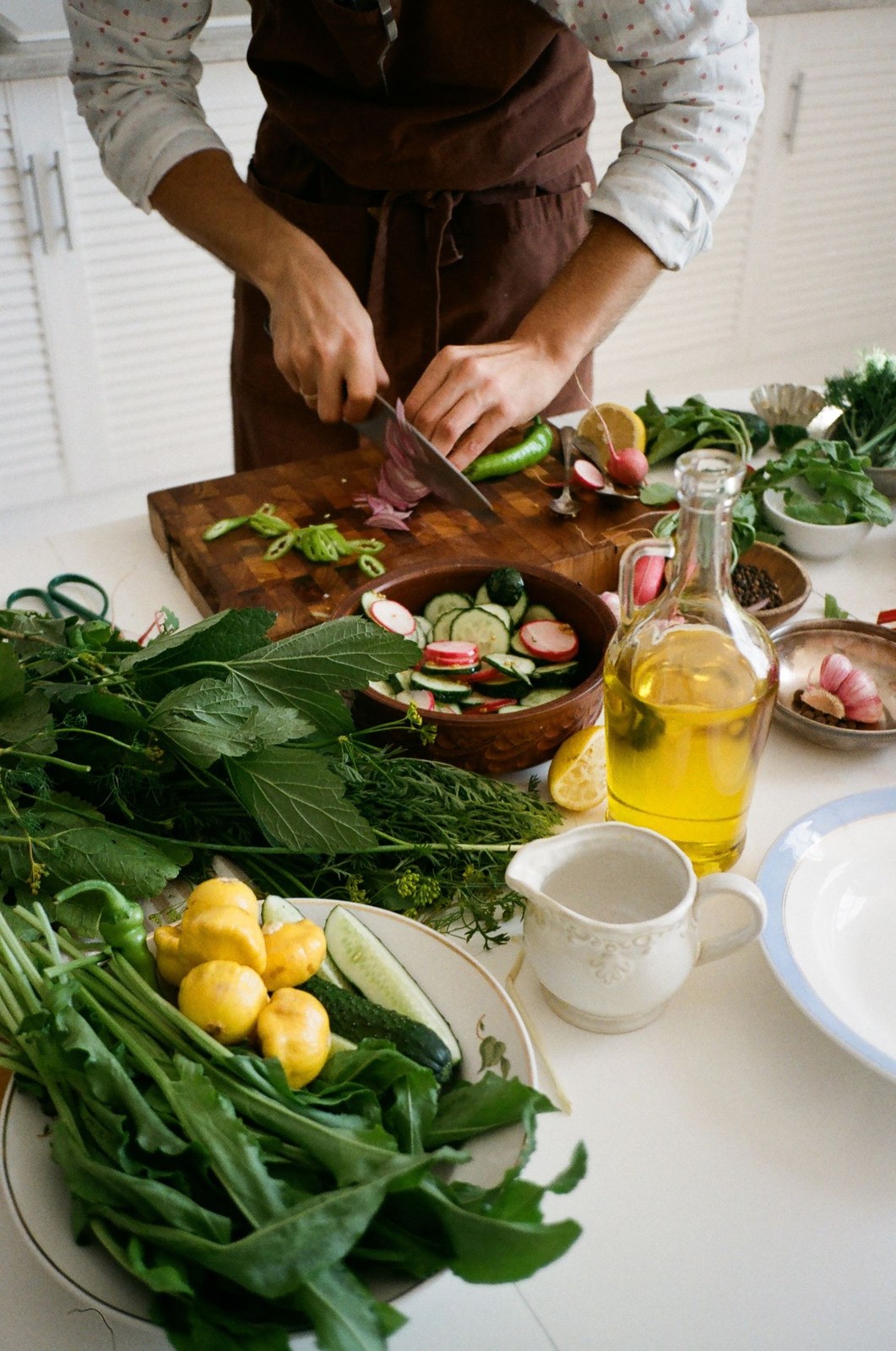
Before turning on the stove, read the recipe from start to finish. Look for steps that happen quickly, ingredients that must be divided and any equipment needed later. A sauce can overcook while you search for a colander you did not realize was required.
Clear a working area and make sure the sink remains usable for hand washing. Put out the main pan, utensils and a safe place for hot cookware. You do not need to place every ingredient in a separate tiny bowl; organize only enough to make the sequence clear.
Prepare in cooking order
Identify the longest task and the ingredients that can wait. Wash and cut vegetables as needed, keeping raw animal foods separated from ready-to-eat items. Use clean tools and surfaces between tasks and return perishables to refrigeration when they are not needed.
Measure ingredients that must be added quickly, such as a small spice mixture or a thickener. Ingredients added at a relaxed stage can often be measured later. This avoids both frantic searching and an unnecessary pile of dishes.
Keep packaging with important instructions available until the relevant step is finished. A rice packet, for example, may specify a water quantity that differs from the one you remember. Check appliance instructions too if the recipe uses equipment unfamiliar to you.
Prepare the finish as well
Have plates or bowls ready, along with suitable containers for any planned leftovers. Check refrigerator space before cooking an extra batch. Divide leftovers into shallow containers and refrigerate promptly rather than leaving food out while you begin a long cleanup.
Keep a clean utensil available for tasting when it is safe to do so. Do not taste raw mixtures that require cooking for safety, and use a food thermometer where appropriate instead of relying only on color or timing.
In a shared kitchen, let others know if you need a burner or clear surface for a particular stage. Avoid spreading ingredients across every available area when someone else also needs to prepare food.
After the meal, notice which interruption caused trouble. Put that item earlier in the setup next time. Good preparation is not about performing a formal ritual; it is about removing the few obstacles that repeatedly make ordinary cooking feel rushed.