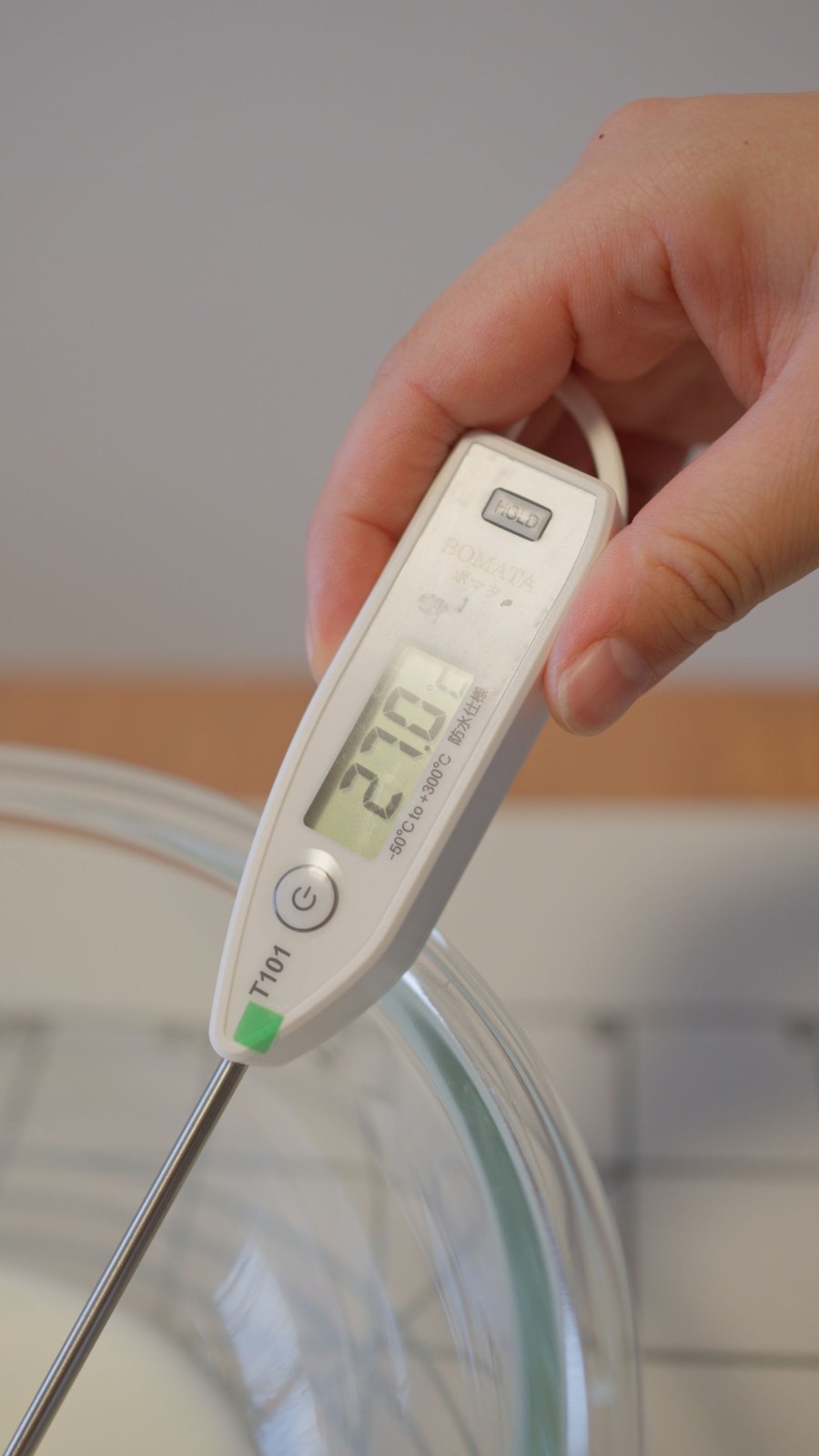
A food thermometer is useful only when it measures the part of the food you need to check. Different models have different sensing areas and response times. Read the instructions so you know how deeply to insert the probe and how long to wait for a stable reading.
Check that the thermometer is designed for the task. An instant-read probe may not be intended to remain in an oven, while an oven-safe probe has its own limits and cable instructions. Do not leave equipment in an appliance unless the manufacturer permits it.
Find the relevant spot
For a thick piece of food, measure in the appropriate central or thickest area, avoiding bone, the pan and large pockets of fat where applicable. For a thin item, the instructions may call for inserting from the side so the sensing area sits within the food rather than passing through it.
For a mixed dish or reheated meal, check several places. A microwave can leave cold spots even when one edge is very hot. Stir or rearrange the food as appropriate, continue heating if necessary and recheck.
Use the safe temperature required for the specific food, not one number for every ingredient. For reheated leftovers, USDA guidance specifies 165°F throughout. Refer to current official guidance for other foods and any required resting periods.
Keep the probe clean
Clean the food-contact part according to the manufacturer's directions before and after use, especially between raw and cooked foods. Do not submerge an electronic body unless it is designed for that cleaning method.
Check accuracy using the method appropriate to the thermometer. Some models can be calibrated; others cannot. Follow the instructions rather than adjusting a device through an improvised procedure. Replace damaged equipment or seek manufacturer advice if readings are unreliable.
Store the thermometer where you can find it during cooking, with its protective cover if supplied. A useful tool left behind several drawers of gadgets is easy to skip when dinner is nearly ready.
Temperature measurement complements the recipe's texture and timing cues. It does not replace safe storage, clean preparation or correct appliance use. With the probe placed properly and enough time for a reading, it gives information that color, steam and a quick touch cannot reliably provide.