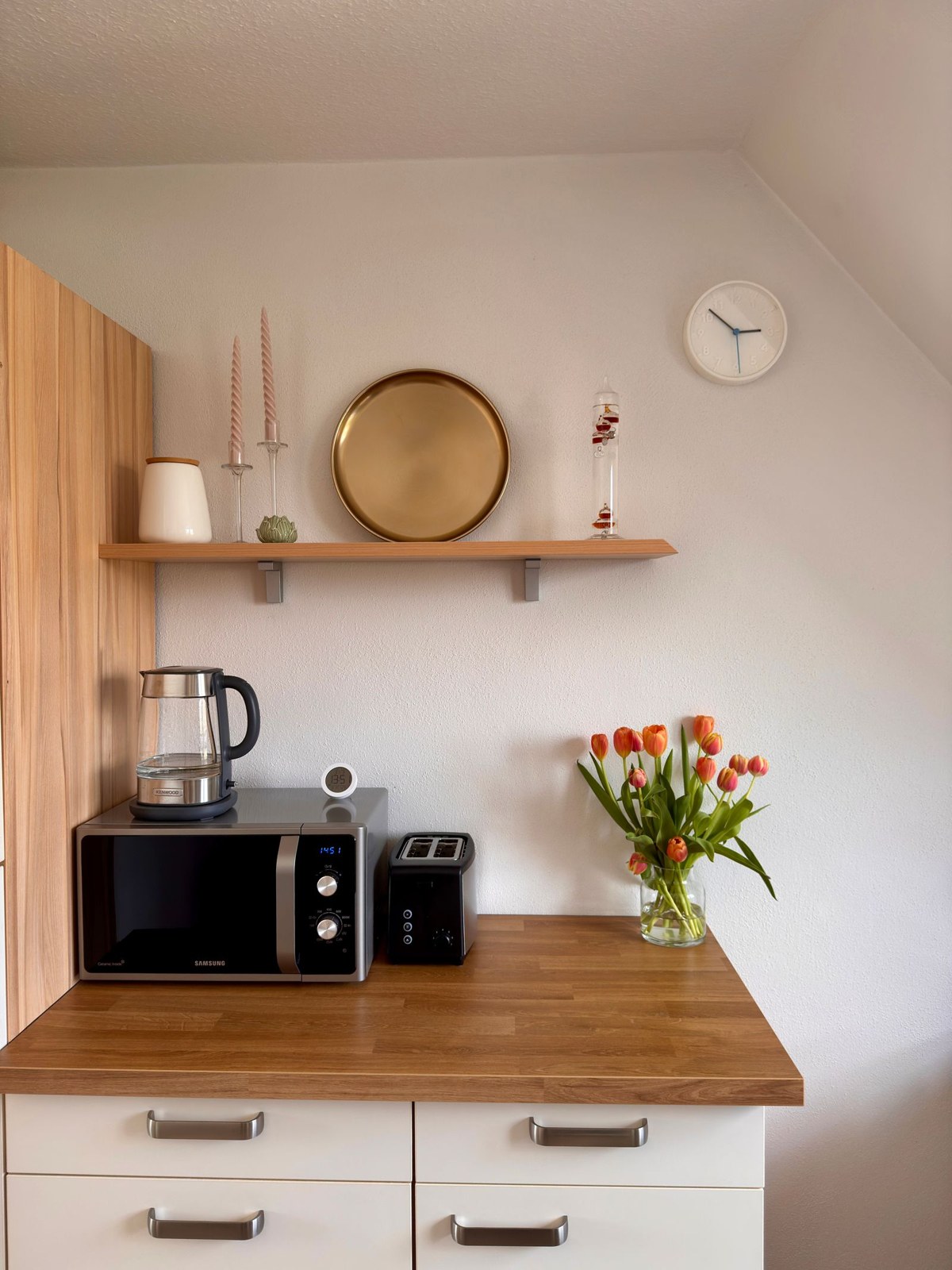
A microwave can make one part of a meal very hot while leaving another part cool. The surface bubbling is not enough to show that the center has reheated safely. Arrange the food, stir where appropriate and check more than one place.
Use a container approved for microwave heating and follow its lid or venting instructions. A storage box that is suitable for the refrigerator may not be suitable for heating. Remove packaging or components that the food or container instructions say should not be microwaved.
Arrange the portion for even heating
Spread food into a reasonably even layer rather than a dense mound when the dish allows. Break up large clumps and separate thick pieces where practical. A smaller portion is often easier to heat consistently than a tightly packed deep bowl.
Cover the food with an appropriate microwave-safe cover, allowing venting as directed. This can retain moisture and help heating, but it does not eliminate cold spots. Add a small amount of suitable liquid if the recipe needs it, rather than assuming every leftover should be reheated dry.
Pause to stir or rearrange the food as appropriate. Rotate it if needed and follow any package directions for power level and standing time. Microwave wattage and portion size affect timing, so an old minute count is only a starting reference.
Check the temperature
USDA guidance calls for reheated leftovers to reach 165°F throughout. Use a suitable food thermometer and check several places, including thicker or cooler areas. Follow the thermometer's instructions and avoid measuring only against the container's hot surface.
Allow the specified standing time before eating. Heat continues to redistribute, and steam or hot fillings can cause burns. Open covers carefully away from your face and hands.
Only reheat food that has been stored safely. If leftovers were left out too long or their handling history is uncertain, microwaving is not a reliable rescue. Take out the portion you need and keep the rest properly refrigerated instead of cycling the whole container through repeated heating.
After a few uses, you may learn a useful sequence for your usual lunch: a first heating period, a thorough stir, another short period and a temperature check. Keep that sequence flexible when the quantity or food changes.