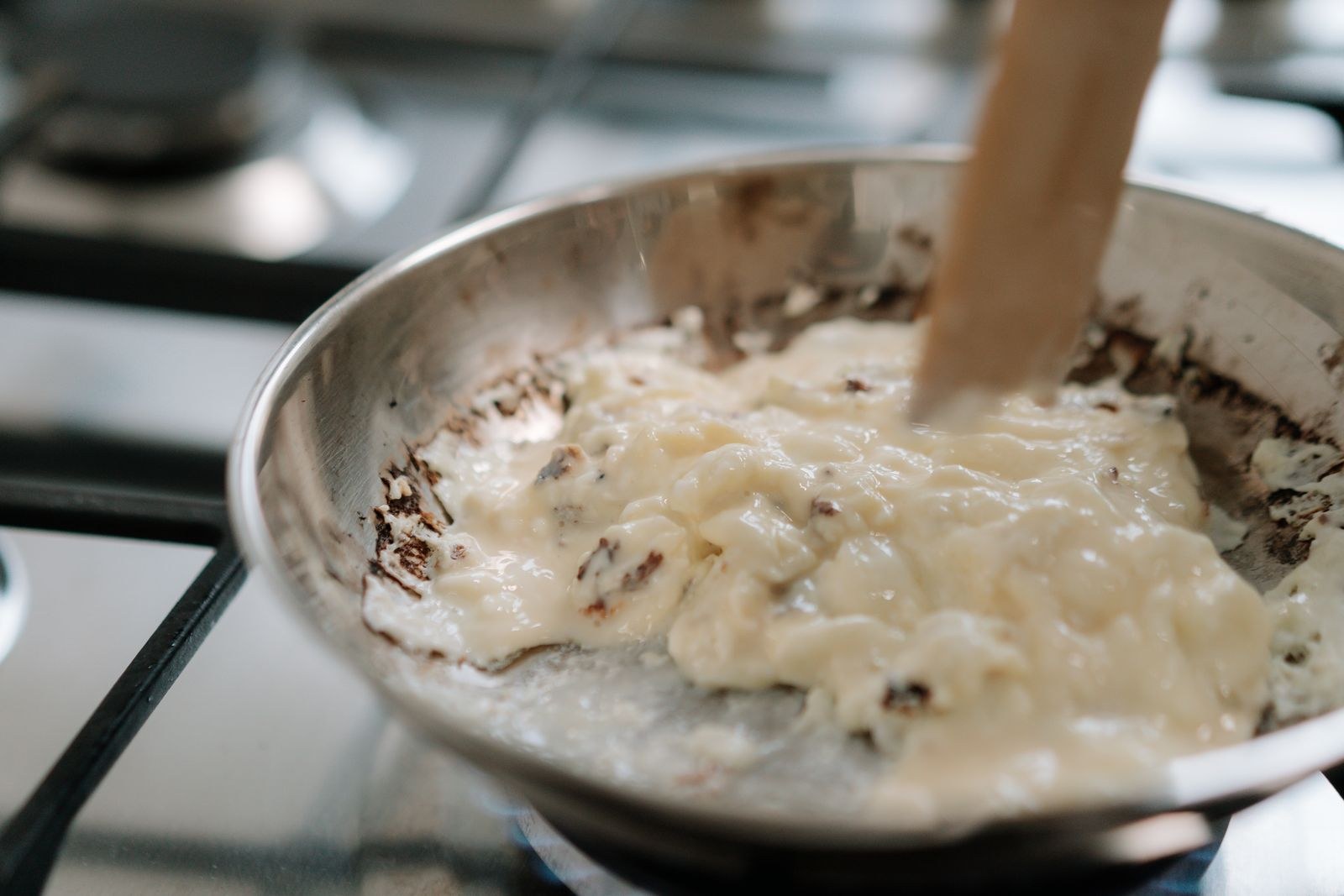
A thin sauce does not always need starch. It may simply contain more liquid than intended or need a little more uncovered simmering. Before adding anything, check the recipe and decide whether evaporation, a starch mixture or another method fits the sauce.
Reduction removes water and concentrates flavor. It can work well for some sauces, but it also concentrates salt and other strong ingredients. Taste where safe and watch the consistency; reducing an already salty sauce may create a thicker result that is less pleasant to eat.
Add starch as a mixture, not a dry handful
When a recipe uses cornstarch, it commonly calls for mixing it with a small amount of cool liquid before adding it to the hot sauce. This slurry helps disperse the starch instead of forming dry lumps. Stir the mixture again if it has settled before use.
Follow a reliable recipe's proportions as a starting point. Add the slurry gradually while stirring, then allow the sauce to heat as directed before deciding it needs more. Adding several rounds too quickly can produce an unexpectedly thick or gelatinous result.
Flour behaves differently and may be cooked with fat as a roux or used through another specific method. Do not substitute equal amounts of different thickeners automatically. Their strength, cooking needs and effect on texture can differ.
Judge at the serving point
Some sauces thicken further as they cool or when mixed with pasta, beans or other ingredients. Consider the final meal rather than making the sauce very thick in isolation. A little reserved cooking liquid can help adjust a pasta sauce later if the recipe allows.
If lumps appear, use a method appropriate to the sauce, such as whisking or straining, rather than continuing to add thickener. Be careful when blending hot liquids and use only equipment approved for that task.
For a sauce that has become too thick, add a small amount of suitable liquid, stir and reassess. Large corrections in either direction make it harder to control the result.
Keep notes on the amount that worked for a repeated recipe, especially if you use the same pan and serving size. Learning one dependable method is more useful than treating thickening as a last-minute guess every time dinner looks watery.